Buying a young dressage horse: why riding experience matters more than talent

At a glance
- A young horse needs an experienced, balanced rider with calm, precise aids who gives it security and orientation.
- Spectacular movement and a big pedigree are no guarantee of rideability or sporting success. Talent only unfolds through qualified, systematic training.
- Less experienced riders can also develop a young horse when a suitable horse, regular professional support and enough time come together.
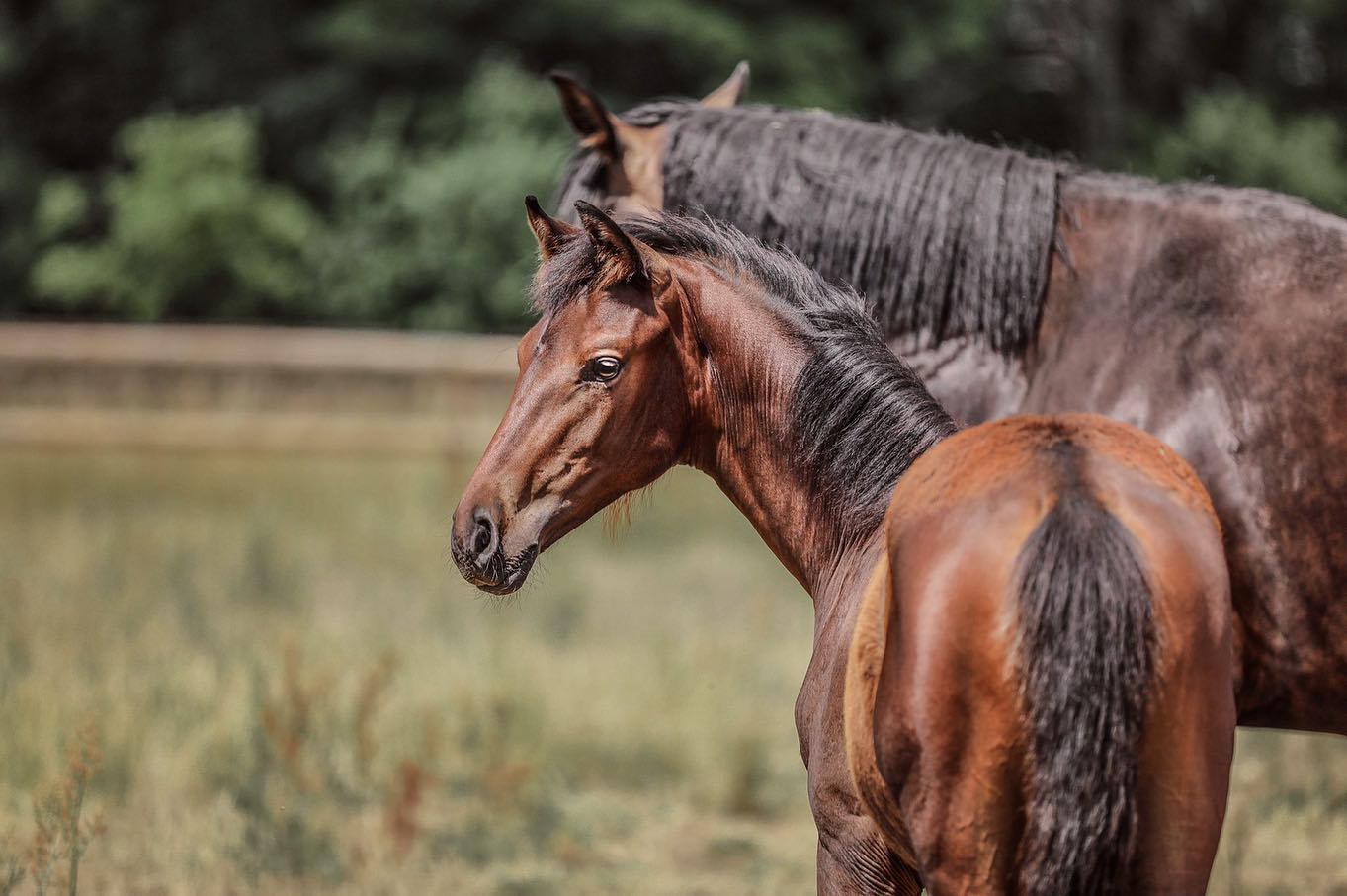
A young dressage horse with expressive movement, an excellent pedigree and great sporting potential: for many ambitious riders that is a dream. From our experience in breeding and dressage sport, we understand this fascination very well. And yet we see again and again that talent alone does not make a good riding horse.
A young horse is at the very beginning. It has to learn to balance under the rider, to understand the aids, to develop a trusting contact and to coordinate its movements more and more. How well that succeeds depends largely on the person in the saddle.
In this article we explain why a young horse needs an experienced rider, what role seat, balance and aids play, and under which conditions a less experienced rider can also develop a young horse well.
Why young horses need a secure, experienced rider
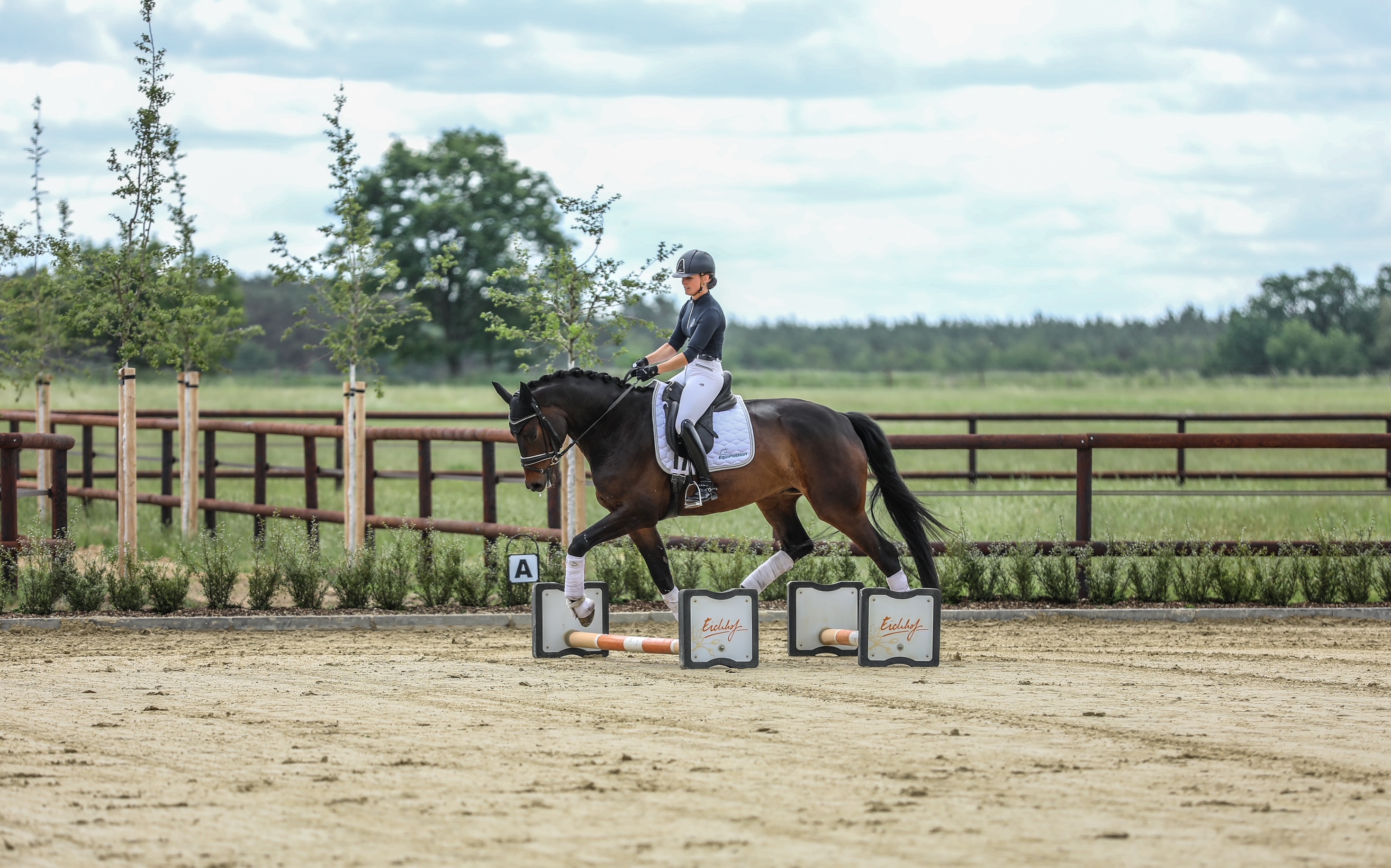
A young horse looks for orientation. It does not yet know what an aid means, how to balance under the rider’s weight or how to react to new impressions. An experienced rider gives it exactly this orientation, through a calm, balanced seat and signals that are always the same and understandable.
Just as important is the ability to interpret difficulties correctly. When a young horse does not respond as expected, there can be very different causes:
- insecurity, because the situation or the surroundings are new,
- lack of strength, because the musculature is not yet sufficient for a task,
- lack of understanding, because the aid has not yet been understood,
- being overfaced, because too much is asked at once.
Each of these causes needs a different answer. An experienced rider recognises the difference and responds accordingly. An inexperienced rider is looking for orientation themselves in such moments, and that is exactly when the horse lacks it.
Seat, balance, aids and timing
With a young horse, the finer points of riding have a particularly marked effect. A trained horse can compensate for small inaccuracies. A young horse cannot yet; it takes every input literally.
- Seat and balance. An independent, balanced seat is the prerequisite for the horse to find its own balance. A rider who balances on the reins or sways in the saddle disturbs the young horse with every step.
- Precise aids. Seat, leg and rein aids must be clearly dosed, well coordinated and unambiguous. Only then can the horse learn what is meant.
- Timing. An aid at the right moment is easy to understand. The same aid half a stride too late confuses. Yielding at the right moment is just as important, because it is the real reward for the horse.
- Calm. A young horse takes on its rider’s inner attitude. Composure in the saddle transfers to the horse.
The training scale as the foundation
The classical training scale with its six elements forms the foundation of long-term, horse-appropriate development:
- Rhythm — the regularity of steps and strides in all three basic gaits,
- Suppleness — physical and mental relaxation during work,
- Contact — the steady, softly elastic connection between rider’s hand and horse’s mouth,
- Impulsion — the transfer of energetic thrust from the hindquarters through a swinging back into the forward movement in trot and canter,
- Straightness — correcting natural crookedness,
- Collection — increased weight-bearing by the hindquarters.
With a young horse, rhythm, suppleness and a trusting contact are the focus. The elements build on and interlock with one another. An experienced rider knows when to encourage, when to yield and when to repeat a training step. They give the horse security instead of having to look for orientation themselves.
Spectacular movement is no guarantee
When buying young dressage horses in particular, movement potential is often rated more highly than rideability, character and training level. Big movement at liberty or on video is impressive and easy to compare. But it says little about suitability as a riding horse.
A horse with a great deal of movement often needs particular riding skill to ride that movement in balance and suppleness. In inexperienced hands, great potential can quickly become too much for both sides.
A talented horse can only develop its abilities if it is trained by someone qualified. That is why, when buying a young horse, we recommend a clear order: character and rideability first, then a correct, clear basic rhythm, and only after that movement potential and pedigree. More on this in our horse-buying checklist.
What happens when a young horse is permanently overfaced
Overfacing rarely comes from a single mistake; it usually creeps in: too much, too early, too unclear. The consequences can be varied:
- tension in the back and neck that becomes fixed in the movement,
- irregularities in rhythm and an unsteady or rigid contact,
- resistance such as rearing, bucking or running off as an expression of stress (such reactions can also point to pain or ill-fitting tack and should always be checked by a vet),
- loss of trust in the rider’s hand,
- physical overload, because a young horse’s musculoskeletal system is still developing and first has to adapt to the work.
Many of these problems can later only be worked through with a lot of time and targeted corrective schooling. Careful training from the start is by far the better path for horse and owner.
When a less experienced rider can develop a young horse too
We do not want to take the dream of a young horse away from anyone. There are situations in which a less experienced rider can also develop a young horse well. For that, several conditions should come together:
- A suitable horse. A young horse with a calm, uncomplicated character and good rideability, not necessarily the one with the biggest movement.
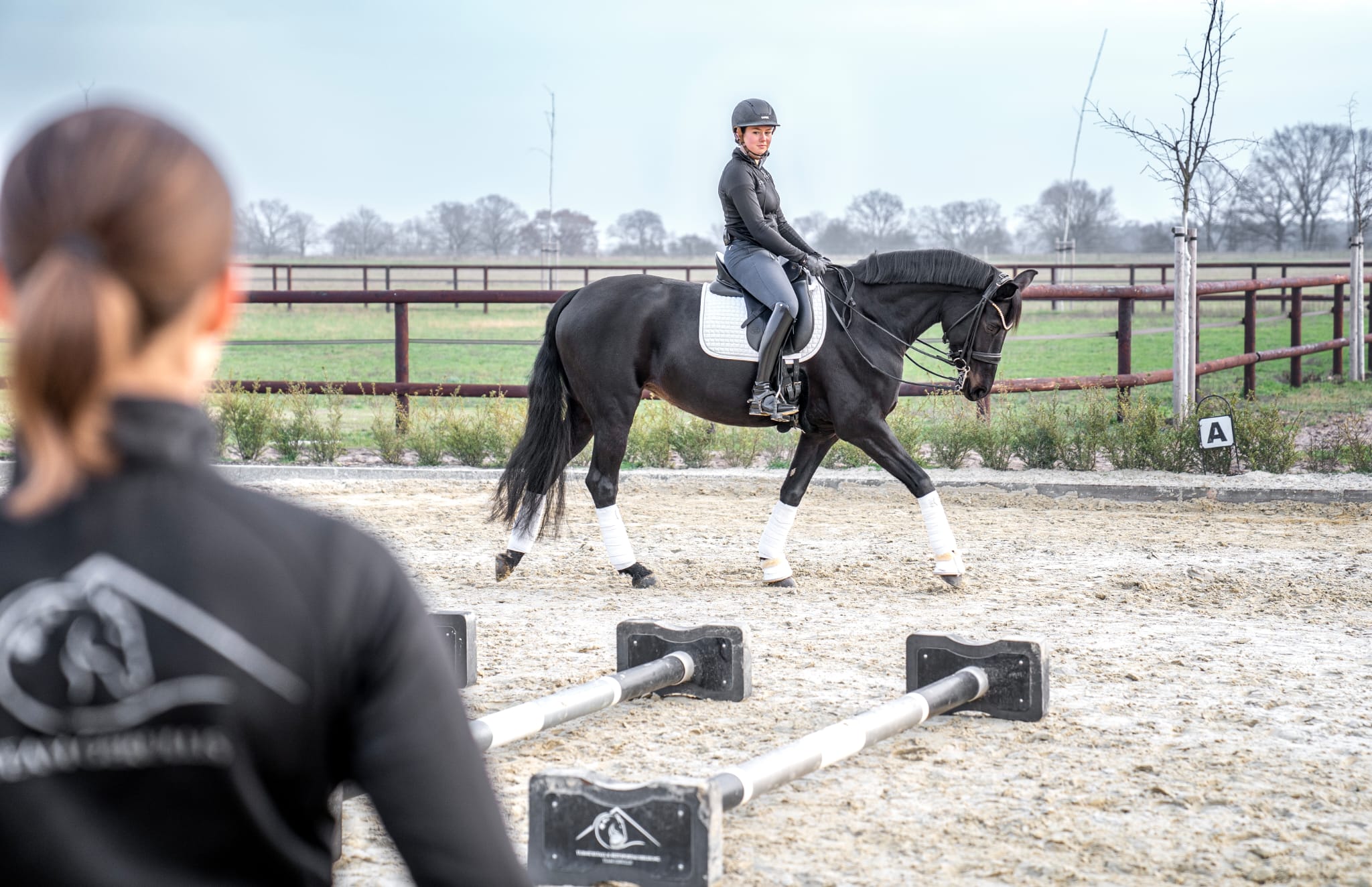
- Professional support. Regular training board with an experienced trainer who rides the horse in the decisive phases.
- Regular lessons. The owner rides under instruction and learns to give the aids the way the horse knows them.
- A solid foundation of their own. A secure, balanced seat and the willingness to keep working on their own riding skills.
- Time and patience. Without a fixed schedule, without outside pressure and with the courage to take a step back when necessary.
Under these conditions, developing together can be a very valuable experience for horse and rider.
Young horse training at Eichhof Akademie
At Eichhof Akademie, careful, individual training of young dressage horses is part of our daily work with the horses. We have known many of our horses from our own breeding since they were foals. From gentle starting under saddle through professional schooling to supporting owners in lessons, the priority is trust, sound basic training and long-term health.
If you are thinking about buying a young dressage horse or would like professional support for your young horse, we are happy to talk with you about what suits you and your horse. You can find our current horses for sale here, or contact us directly.
Conclusion
A young horse does not need a rider who is impressed by its talent, but a person who knows how to develop that talent carefully and systematically.
Further reading
- Training scale: practical guide — the six elements step by step
- Having a young horse started — gentle, clear and without pressure
- Young horse, young rider? — why children need an experienced schoolmaster
Questions & Answers