What to watch for when buying a dressage horse: a real checklist

At a glance
- Character and rideability are the two most important criteria when buying a dressage horse — conformation and movement come after.
- A pre-purchase exam (PPE) and a thorough trial ride — ideally on two separate days — are non-negotiable.
- Buying directly from the breeder substantially reduces uncertainty about a horse's history; at the Eichhof, rearing, starting and sale are all in one hand.
Buying a horse has little to do with luck and a great deal to do with preparation. If you ask the important questions early and don’t get blinded by sales drama, you’ll have found a good horse in 80 percent of cases. The other 20 percent is day-to-day form — that nobody really controls.
When you buy a dressage horse, five things matter most: character, rideability, conformation and movement in exactly that order, plus a careful pre-purchase examination and an honest trial ride — ideally on two days. Buying directly from the breeder reduces uncertainty about the history dramatically. At the Eichhof breeding farm in Schenkenhorst (Potsdam-Mittelmark), you see our horses from the foal stage to the ridden four-year-old in one place, with full transparency on rearing.
In what follows we share the checklist we use ourselves when selecting horses for our boarders and clients — pragmatic, without sugar-coating.
Start with: what do you actually want
Before you open the first advert, do the homework at the desk. Anyone who skips this usually buys, in the end, the horse they saw yesterday — not the one they need.
Three questions that really decide:
- How often do I ride per week? A horse built for four to six trainings will become under-stimulated and difficult on two weekly rides.
- What trainer support do I have? A young horse without professional support is a bet that rarely pays off. Clarify before purchase who will help train the horse.
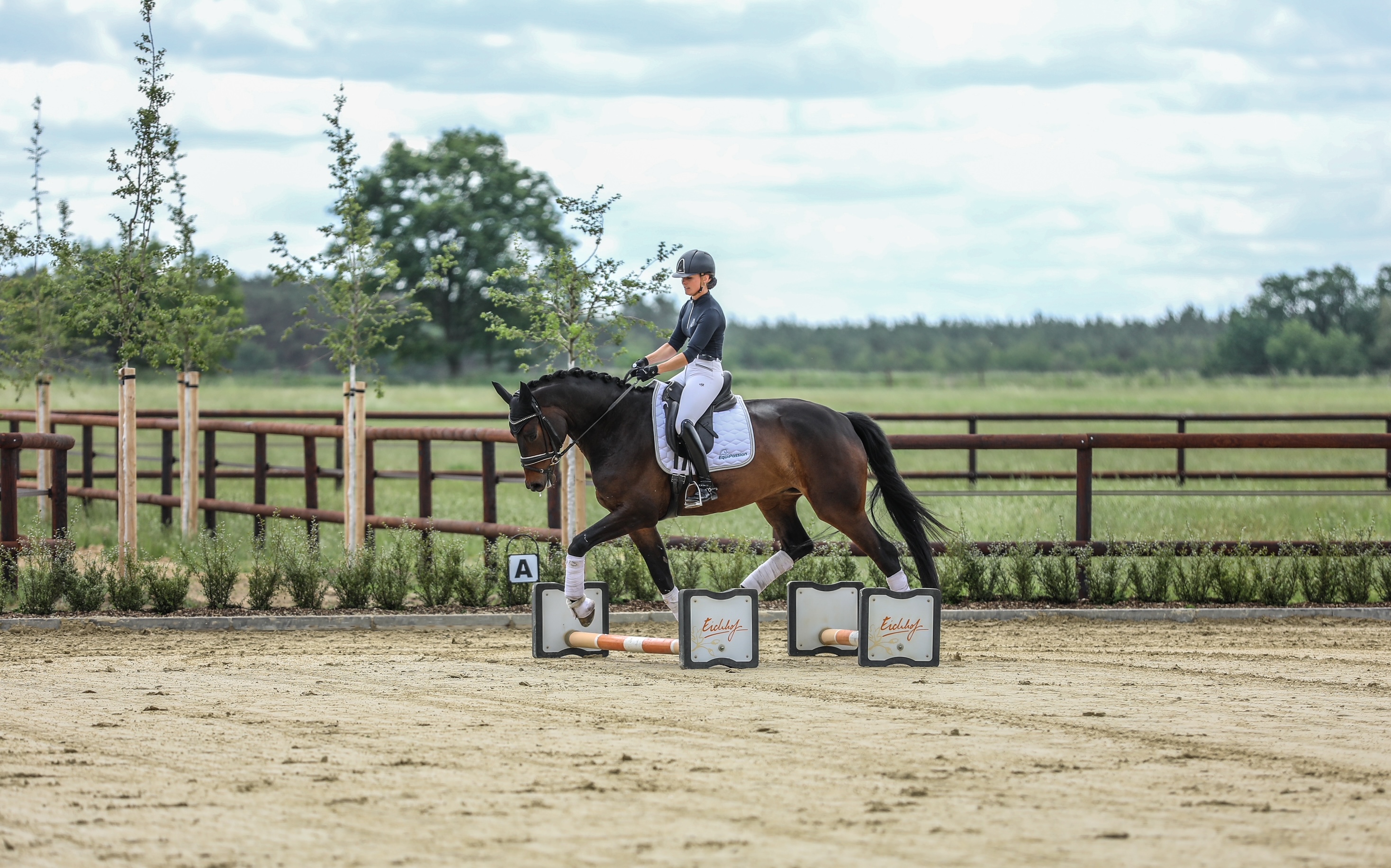
- Which discipline do I really want to ride? Pure dressage, or jumping, eventing, seat work too? At Eichhof Akademie we deliberately train across all disciplines, because a versatile horse stays sounder long-term.
If you have answered those three honestly, the search is already half done — you know which adverts to click away from immediately.
Character and rideability first
Sales presentations usually run in this order: movement, pedigree, then character. We strongly recommend buyers reverse that view.
Character shows in the routine moments, not in the presentation. How does the horse react when you take it out of the stall? How does it handle being groomed, the girth, mounting? A well-socialised horse is calm here — neither over-eager nor apathetic, but attentive and cooperative.
Rideability is the horse’s willingness to accept and execute aids. It doesn’t show in the trot showpiece but in the fine transitions: walk to trot, mid-line to bend, depart from the hindquarters. A horse that responds clearly in those transitions becomes easier to ride with each year of training — a „spectacularly moving” horse that tenses up in transitions becomes harder each year.
In our Hanoverian breeding we deliberately select for these traits — character and rideability matter more in our matings than the brand-name stamp of the stallion.
Conformation and movement — what really matters
Once character and rideability check out, conformation matters — as the precondition for the horse to physically cope with sport. Three points are practically relevant:
- Correct legs. Knees and hocks should align with the centre of the hoof. Slight deviations are tolerable, marked deviations are a wear-and-tear risk factor.
- Shoulder slope. A sloping shoulder is the prerequisite for an expansive forehand. A steep shoulder produces a short stride and wear in the shoulder girdle.
- Back line. A back that is too long or too weak requires markedly more training to maintain push from the hindquarters. In young horses you can assess this, but only in the context of maturity.
Movement should be correct, not spectacular. A clear four-beat walk with overstepping, a rhythmically clean trot with push from the hindquarters, an uphill canter — that is enough for amateur sport up to Medium (M) level and beyond. Trot showpieces in free run are sales-friendly but not an indicator of training suitability.
PPE and trial ride — the two non-negotiables
A pre-purchase exam costs money; a missed finding costs more. For a sport horse from age four, the full PPE with X-rays is standard. For a young, well-bred horse, the smaller PPE plus extra views of critical joints often suffices.
Important points we keep telling buyers:
- You choose the vet. Not the seller. That is a fundamental impartiality matter.
- Findings are not automatic deal-breakers. Almost every sport horse has radiological findings somewhere — the question is whether they restrict the planned use.
- Don’t forget the airways. For horses with unclear history or coughing in the past, an endoscopic exam is worth doing. Equine asthma is more common in the sport-horse segment than people think.
For trial rides, the rule is: two days if possible. Horses have day-to-day variation just like people. A horse that rides consistently on both days is making a different statement than one that shines on day one and is different on day two.
From the breeder, from a pro’s training, or from a dealer? Pros and cons
The route of purchase matters more than most buyers realise. Three realities:
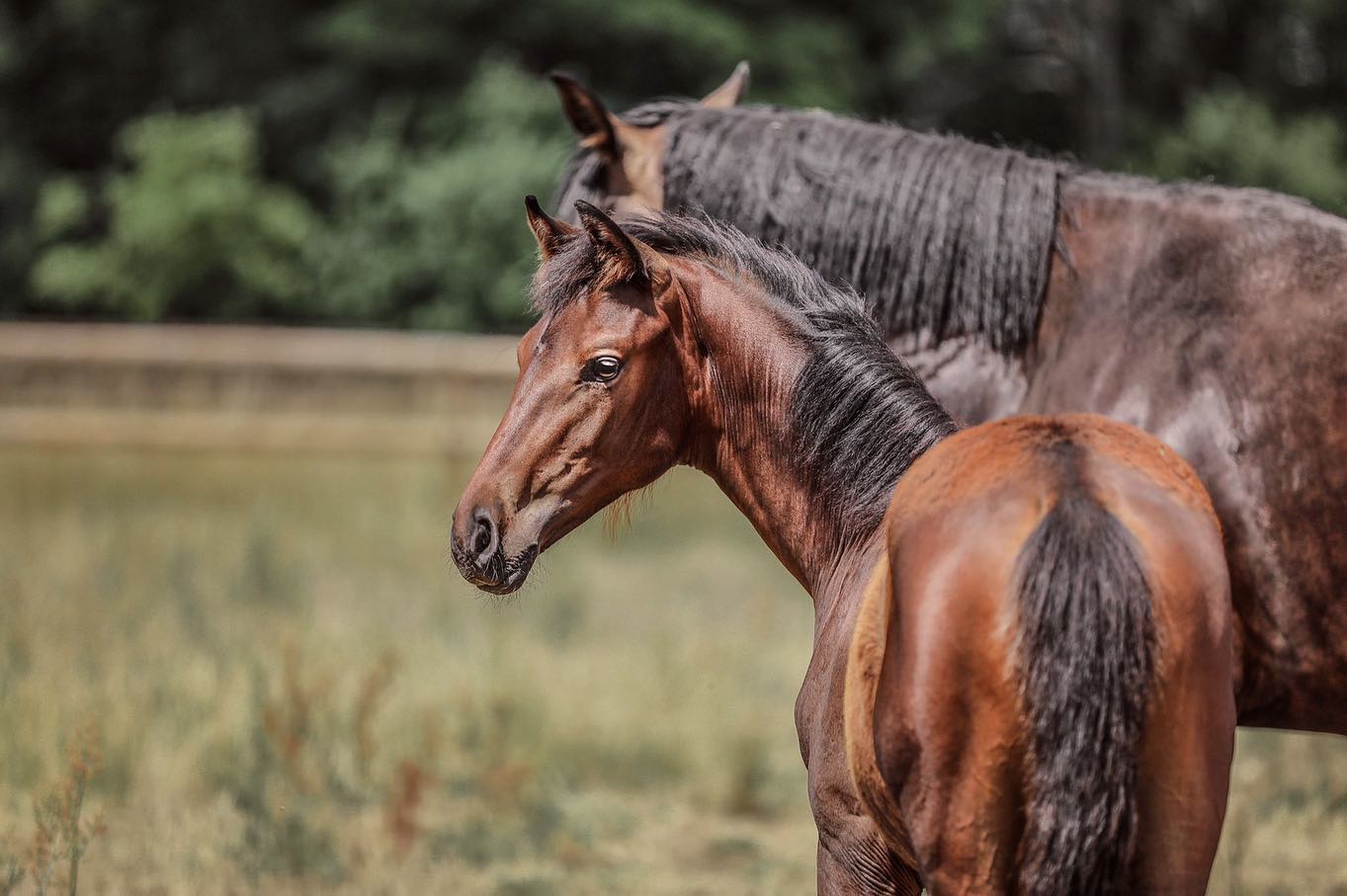
- Directly from the breeder: maximum history, often a fair price, but a smaller selection. You see where the horse grew up, who started it, how it developed. At the Eichhof, that is the case — rearing and further training happen in Schenkenhorst.
- From a professional’s training board: the horse is usually very well ridden, but you should clarify why it is being sold. Common reason: changes on the rider’s side, not the horse’s. Ask for previous-owner contact if possible.
- From a dealer: the largest selection, but often a fragmented history. The horse may have been at three or four stations, of which you only see the last one. Day prices can be higher than at the breeder, because margin is built in.
None of these routes is „better” — they are different. If you want clarity on history, you most likely buy from a breeder. If you’re looking for a specific level that’s hard to find, dealers or professional training yards are more likely to deliver.
When you want to know what we currently have
Our currently available horses with status, pedigree and short character notes are on our breeding & sales page. If you are interested in a specific horse or have no clear vision yet — write to us briefly about what you ride and what you’re looking for, and we get back personally.
Horse-buying checklist
| Step | What to watch for | When |
|---|---|---|
| Define need | Riding volume, trainer setup, discipline | Before any advert visit |
| First viewing | Character in handling, rearing conditions | At the yard |
| Trial ride | Rideability, transitions, day-to-day form | On two days, ideally |
| PPE | Clinical, X-rays, endoscopy if needed | After successful trial |
| Contract | Findings documented, return policy clear | Before payment |
| Handover | Shoes, passport, ownership document | At pickup |
Further reading
- Pre-purchase examination for a dressage horse — Bundestierärztekammer X-ray guideline 2018
- Horse from breeder or dealer — advantages, risks and decision aid
- Hanoverian foal to buy in Brandenburg — if you want to accompany the horse from the start
Questions & Answers