Have a young horse started: gentle, clear, and without pressure

At a glance
- Horses are usually started at three to four years — physical maturity and mental composure matter more than the date in the passport.
- The actual starting takes six to twelve weeks, followed by a build-up phase under saddle; trying to 'finish' a horse in three weeks is risky.
- The first weeks shape the whole riding life — bad experiences are hard to correct later.
Starting is the most important phase in a horse’s life. What is laid here shapes the next ten to twenty years — physically, mentally, in the way the horse takes the aids. Anyone who treats starting as a „three-week job” is buying corrective training that costs ten times as much later.
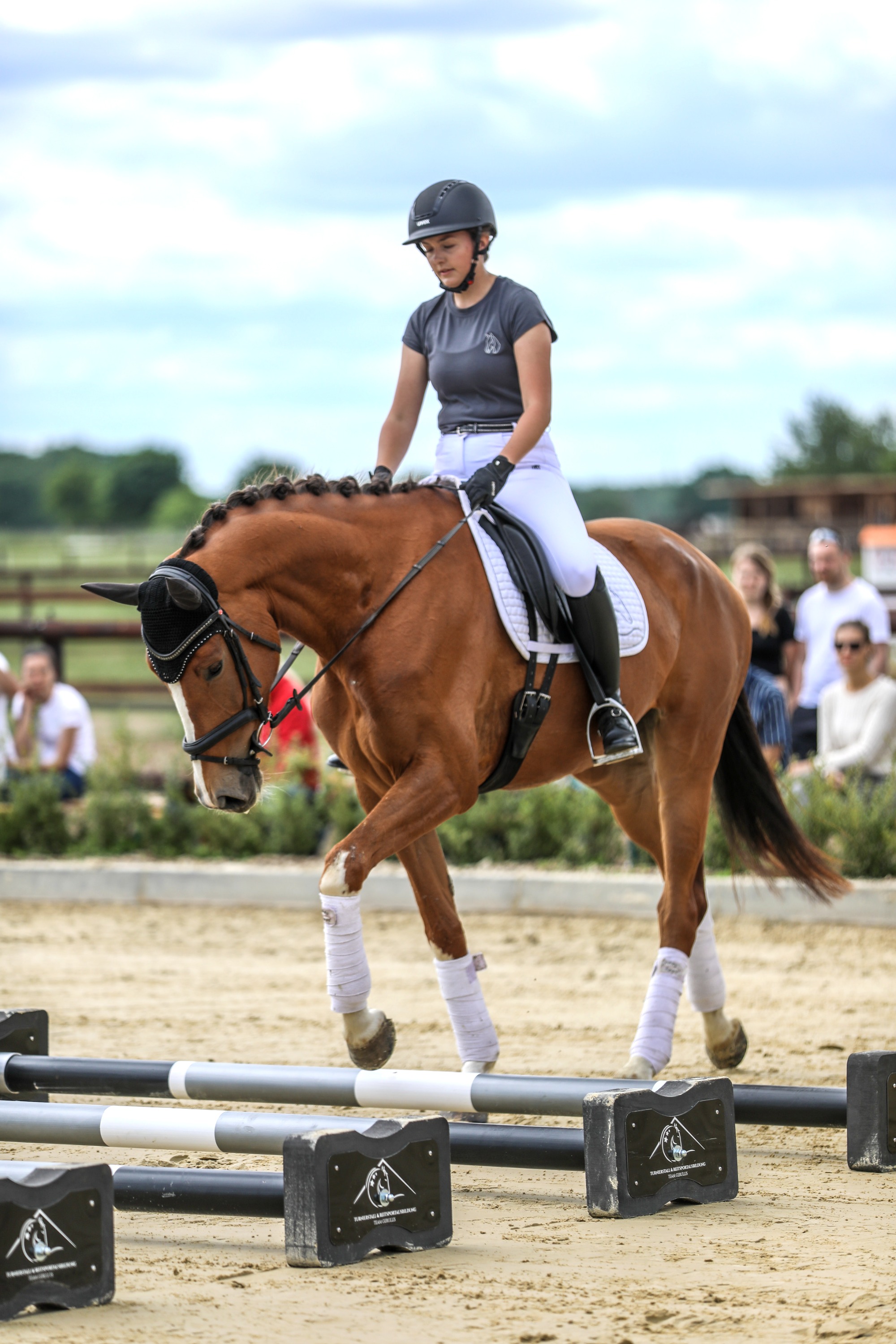
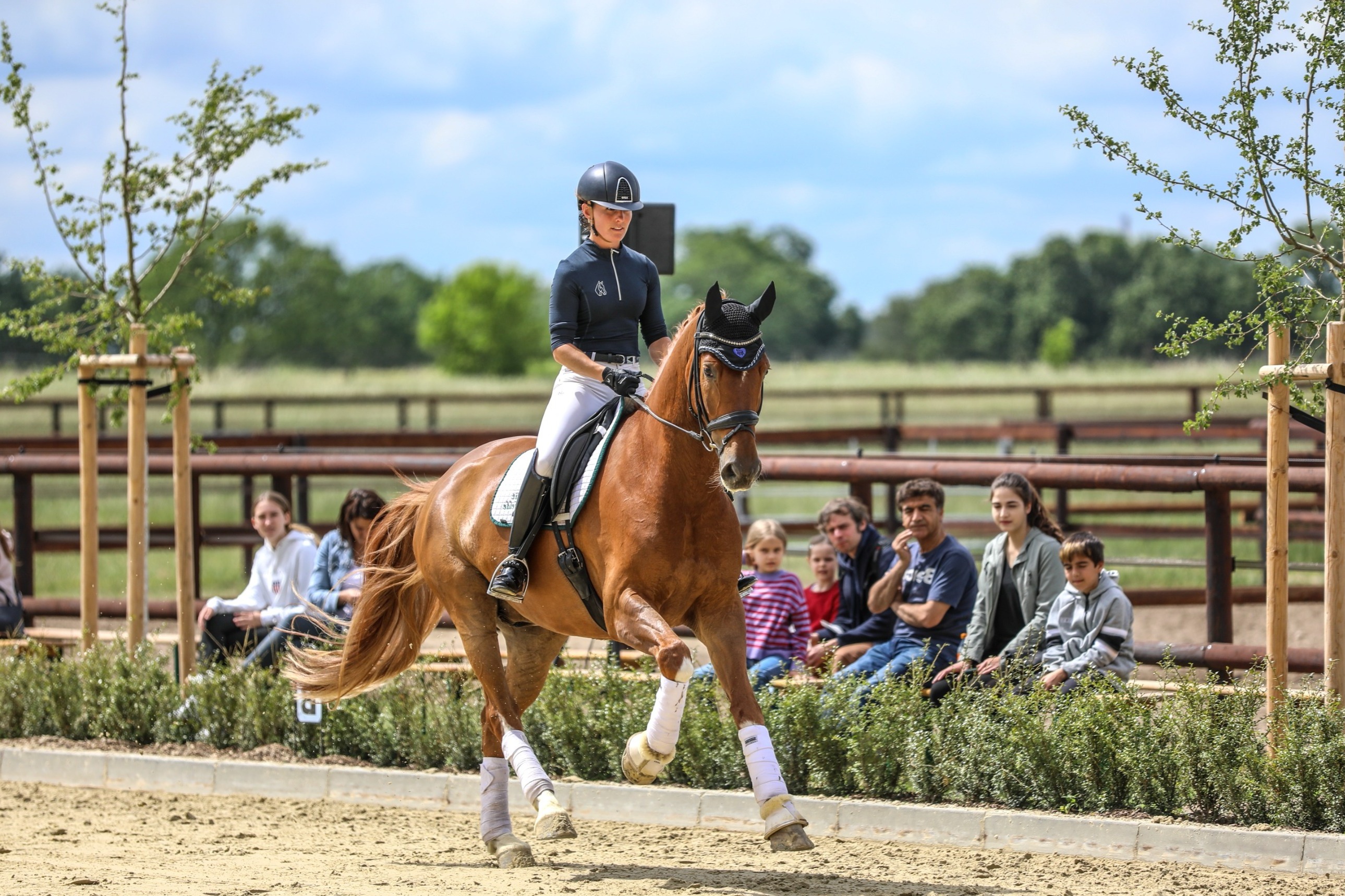
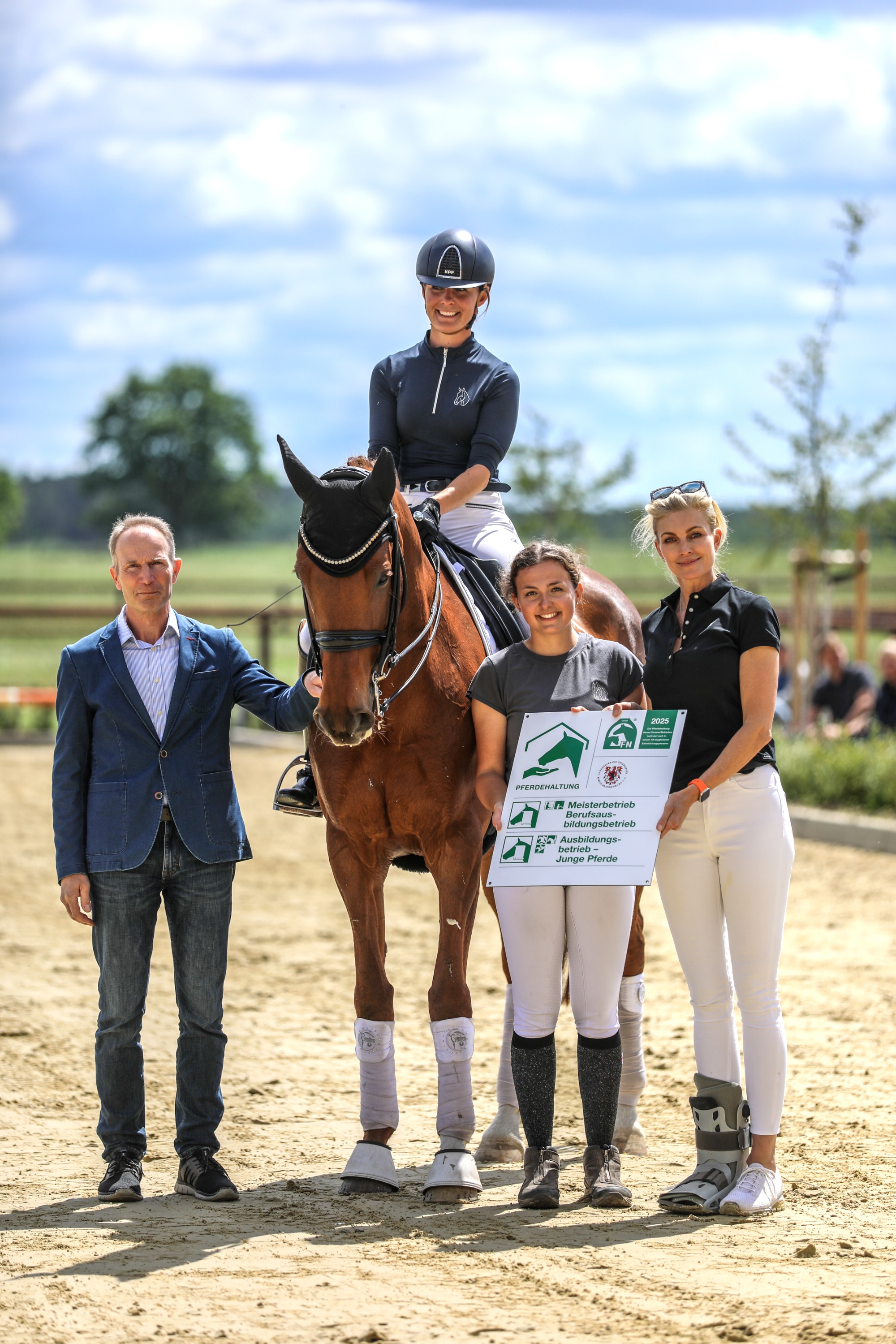
Starting begins classically with groundwork at three; ridden work follows at three-and-a-half to four. What matters is physical maturity and mental composure, not the date in the passport. At Eichhof Akademie in Schenkenhorst (Potsdam-Mittelmark), Master Equine Manager Pia Anina Gerullis and dressage trainer Kim Jesse start horses gently over six to twelve weeks, followed by a build-up phase in training board — all in the consistent training rhythm of a professionally equipped facility.
In what follows we explain when a horse is ready to be started, how the process plays out in practice, and what to look for if you are sending yours to be started.
When is a horse mature enough to be started
Three readiness conditions must come together — physical load-bearing capacity, mental quiet, and stable socialisation in the group. Skipping one of these creates problems.
Physical maturity:
- Growth largely complete — for large warmbloods this is often only the case at three-and-a-half to four.
- Skeletal frame load-bearing — the horse should be able to carry its own weight plus rider without visible effort.
- Hoof balance correct and properly trimmed.
Mental maturity:
- Calm in handling, curious rather than fearful.
- Accepts clear boundaries on the ground.
- Allows itself to be groomed, hoof-handled, saddled without stress.
Social maturity:
- Has learned to manage conflicts in the group.
- Has developed self-confidence — a horse raised in solo turnout is often at a disadvantage here.
At the Eichhof breeding farm we deliberately rear foals and weanlings in groups — that social maturity pays off concretely during starting. Anyone buying a horse raised alone should expect a longer settling and socialisation phase.
The steps of starting
We structure starting into six stages that build on each other. Each stage is completed before the next begins — that is the difference between clean starting and a quick programme.
- Trust-building on the ground. Grooming, picking up hooves, leading. The horse learns that contact is not frightening and that the human gives clear, fair signals.
- Familiarisation with equipment. Halter, bridle, saddle — step by step, without haste. With the girth we take time; rushing here builds long-term girth issues.
- Lunging with saddle and bridle. The horse finds balance without rider weight. Walk, trot, canter on the lunge with clear voice commands.
- First mounting from the ground. Standing still, often with a second person who holds and reassures the horse. That first second in the saddle leaves an imprint — it should be calm and unspectacular.
- First ridden phases at walk. Straight lines, simple turns, clear halt transitions. Initially short — often only 10-15 minutes.
- Trot and canter on simple lines. First in the indoor arena or lunge ring, later on the dressage arena. Walk breaks are essential; trot is not forced.
These stages together take six to twelve weeks. What many underestimate: the days off between phases are decisive. Horses learn physically when ridden, mentally when resting.
What can go wrong — and how to avoid it
In twenty years of practice we keep seeing the same starting errors. Three are particularly serious:
- Too fast a build-up. If the horse is being chased into canter after three weeks, physical tension builds. That tension rarely dissolves on its own — it becomes the baseline.
- Too much pressure in the early phase. Horses learn in two or three repetitions what they don’t have to do — unseating the rider, running off, bucking. Anyone not calmly and uncompromisingly clear in the early phase writes those problems into the horse permanently.
- Inconsistent aids. When three different riders start the horse with three different methods, the horse learns nothing — except that aids are unreliable. We recommend: one main starting rider, complemented by one or two trusted trainers, nobody else.
Once such errors are ridden in, they can only be worked out again with targeted corrective schooling — an effort that exceeds careful initial training many times over.
At Eichhof Akademie this is a clear principle. During the starting phase one or two riders are responsible for the horse, the trainer team observes and corrects. Owner Franziska Gutsche accompanies the phase from a breeder’s view — she has often known our Eichhof horses since the foal stage and is familiar with their individual characters.
Starting at the Eichhof: what you can expect
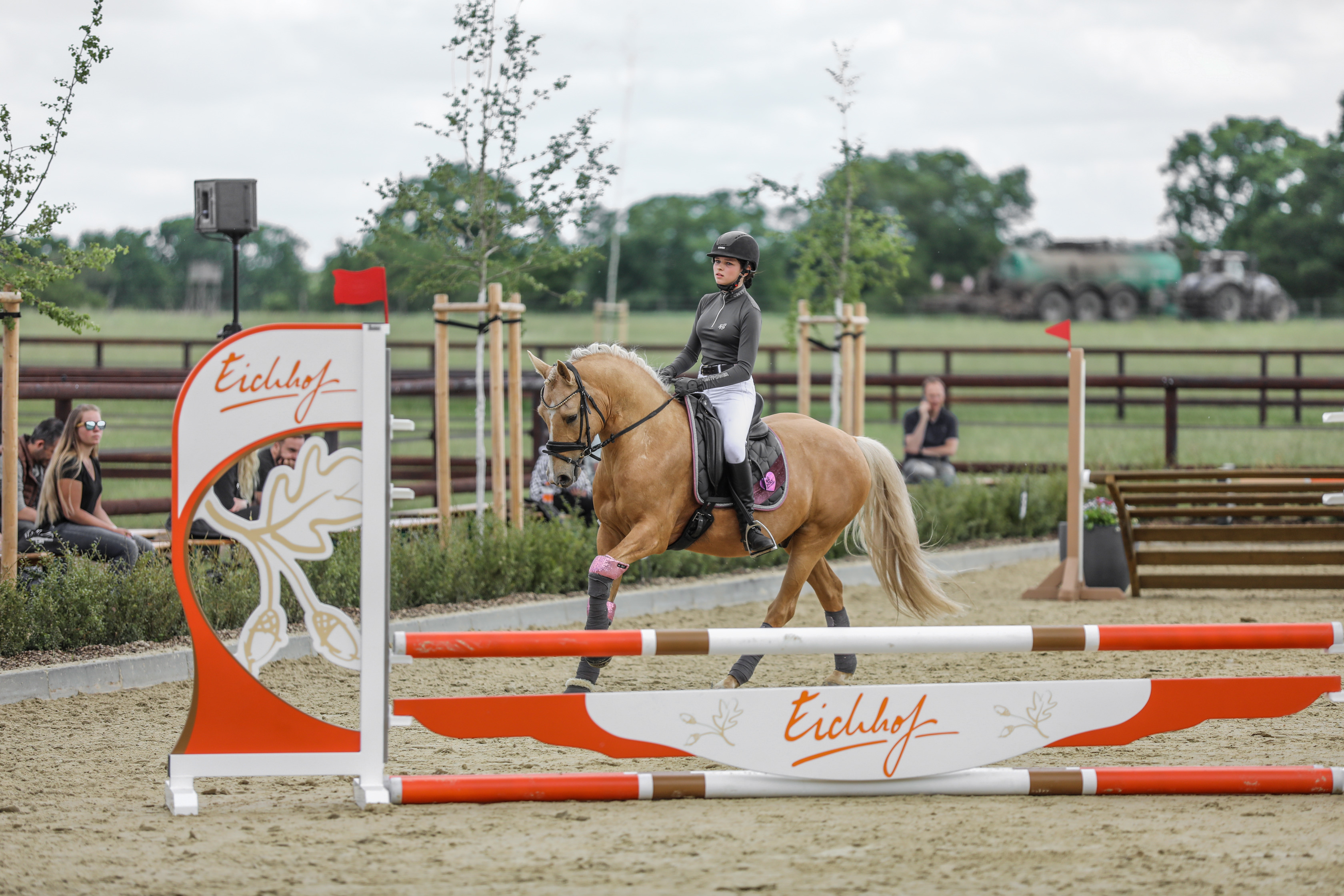
We start horses on a facility that is built for the task:
- Indoor arena 20 × 40 m with ebb-and-flow surface — usable even in winter and bad weather.
- Two lunge rings — for the first movement sessions without a rider.
- Dressage arena 20 × 60 m — first ridden phases with clear track.
- Trail terrain right at the yard — sandy paths without roads, ideal for first hacking experiences.
- Bright outdoor stalls with shavings — good air quality matters precisely in the starting phase, when the horse processes physical stimuli.
Concretely, a horse’s stay in starting training board runs roughly:
- Weeks 1-2: Settling, groundwork, lunging without saddle.
- Weeks 3-4: Familiarisation with equipment, lunging with saddle.
- Weeks 5-6: First mounting, short walk phases under saddle.
- Weeks 7-8: Trot on simple lines, transitions.
- Weeks 9-12: Canter, longer ridden sessions, first turns and lessons.
From week 12 onwards many horses move into classic full or part training board, where they develop fitness, musculature and ridden routine over several months.
After starting: training board, break, or home yard
After the first twelve weeks the horse is ridden — but not trained. Three sensible routes:
- Full training board for 6-12 months. The most consistent path, especially for riders with little experience of young horses themselves.
- Part training board alongside owner riding. Sensible if the owner is well-experienced and has a trainer.
- Break and later re-start. Some horses benefit from two to three months of free turnout after starting, before build-up training begins.
Which option suits your horse depends on character, physical maturity and your own riding volume. We discuss it individually — happy to in a personal pre-call at the Eichhof Akademie. Contact us if you want your young horse started here — we take time, look at the horse and discuss the right path.
Starting on a timeline
| Phase | Period | Content |
|---|---|---|
| Preparation | Weeks 1-2 | Trust-building, groundwork, lunging |
| Equipment | Weeks 3-4 | Saddle, bridle, lunging with kit |
| First riding | Weeks 5-6 | Mounting, walk, short sessions |
| Trot and canter | Weeks 7-12 | Transitions, simple lessons |
| Build-up phase | Months 4-12 | Full or part training board with trainer |
| Consolidation | From month 12 | Owner training with trainer support |
Further reading
- Training scale: practical guide — the methodical foundation of any classical training
- Hanoverian foal to buy in Brandenburg — where the future riding horse comes from
- From A to S: Roadmap of dressage training — what comes after starting under saddle
Questions & Answers