Horse from breeder or dealer? The honest comparison

At a glance
- Buying from the breeder means maximum transparency about the mare, rearing and prior history — the buyer often sees several generations, knows the trainer philosophy and can trace the development of the horse.
- Buying from the dealer offers selection and quick availability, often a professionally presented riding horse with documented training — but usually with less depth of information about the early years of life.
- For a long-term sport horse, direct purchase from the breeder is often the more well-founded choice. For buyers with a clear requirement profile and limited time window, the dealer purchase can be the more practical path. Both have justification.
Anyone wanting to buy a horse stands sooner or later before a fundamental decision: from the breeder or from the dealer? The question sounds simple but has consequences for procedure, risk, price structure and the relationship to the bought horse. Both paths have their justification — what matters is the match with your buyer profile.
In this article we honestly compare both paths. We write from the perspective of a small Hanoverian breeding and direct seller — but we also know what a good dealer can do, and when the dealer purchase is the right path.
The two sale worlds at a glance
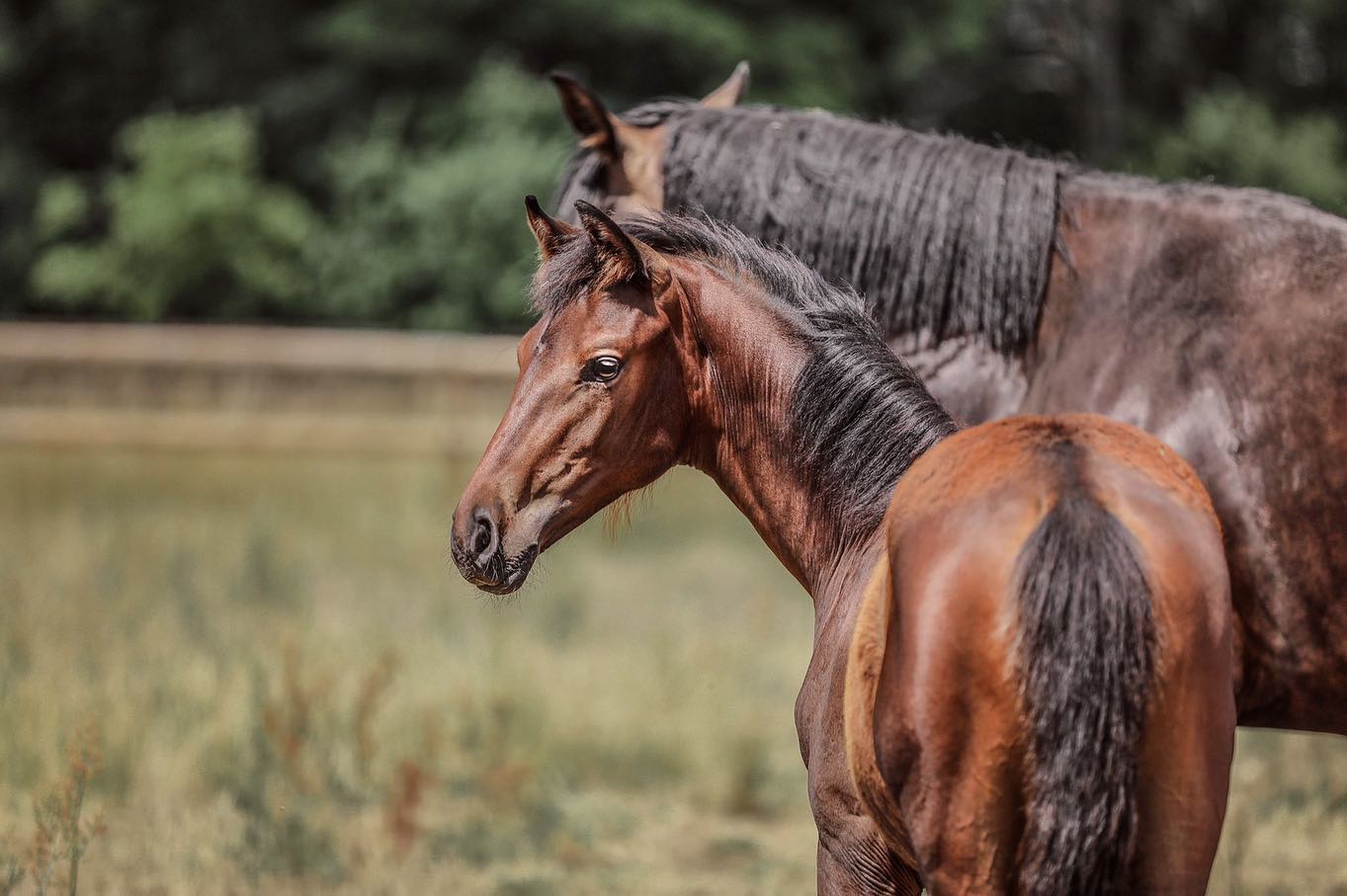
The breeder raises horses from their own breeding. Typically one to five horses per year that they accompany from birth to sale. Mare, sire, rearing group — everything is transparent and viewable on site. Sale takes place directly from the breeder’s yard, often with long lead time and individual selection.
The dealer buys horses from various breeders (nationally and internationally), prepares them for sale and resells them. Typically dozens to hundreds of horses per year. The sale yard usually has a broad selection, the horses are presented dressage-wise or jumping-wise, with documented training and photo/video material.
Between these two poles there are mixed forms — small yards offering a few bought-in horses, or larger breeders also handling mediation sales for fellow breeders.
Advantages at the breeder
Deep prior history. The breeder knows the horse since birth. They know how the rearing went, which farrier history the horse has, whether it was sick as a foal, how it behaved in the group. This depth of information rarely exists in this form at the dealer.
Mare visible. At many breeders you can meet the mare, often also grandmother and half-siblings. This gives hints to the later character and aptitudes of the sale horse — mare-line performance is hereditary.
Continuity in training. Anyone buying a horse from the breeder that was also started and trained there does not buy a horse that has passed through many hands. Changing riding systems shape horses — a continuous training line protects from this.
Personal relationship to the seller. The breeder selling you a horse has an interest in your being satisfied — even years after the sale. Their good reputation depends on it. At the dealer, this relationship is naturally looser.
Price structure. Often — not always — direct prices at the breeder are somewhat cheaper than at the dealer because no mediation margin is included.
Disadvantages at the breeder
One-sided selection. A breeder has only their own horses in sale. If you seek a very specific profile — an Elementary-ready horse with particular character and certain lines — you probably won’t find it at the individual breeder.
Time effort. You visit one yard, see three horses, drive on. With ten breeders you visit ten yards — that costs time and kilometres.
Farm-blindness. Some breeders don’t see the strengths and weaknesses of their own horses objectively. The beloved mare has ‘wonderful character’ (even if she is actually nervous), the own foal is ‘phenomenal’ (even if it is only average). Get an external opinion — an experienced trainer or befriended rider who is not emotionally attached to the horse.
Waiting time. If you buy a still-unstarted young horse, you wait two to three years until it is a riding horse. If you have the starting and professional schooling done at the breeder’s, monthly rearing and training costs arise.
Advantages at the dealer
Selection in one place. A good sale stable has 15 to 30 horses at the same time. You can test five horses in one day, compare, decide. This saves time and sharpens the selection because you compare directly.
Concrete requirement profile served. Anyone seeking an Elementary-ready dressage horse, a five-year-old mare with good aptitudes for Medium, or an experienced school horse often finds it more quickly at the specialised dealer than at the individual breeder.
Quick availability. The horse is to see today, to buy the day after tomorrow, in the new stable in two weeks. Anyone in a concrete life situation — loss of the previous horse, new training claim — appreciates this speed.
Professional presentation. A good dealer shows the horses so you can see their aptitudes. They know the typical buyer questions, have video and photo material, can ride the horse in various tempos and figures. This helps with selection.
Disadvantages at the dealer
Limited depth of information. If a horse has stood in the sale stable for three weeks, the dealer barely knows it. Prior history, rearing conditions, early experiences — all retold at third hand, often gappy. Anyone who values depth of information gets it more rarely here.
Sales pressure and margin. The dealer must sell horses to operate economically. This can affect the advisory style — sometimes subtly, sometimes obviously. The sale price contains a margin that, depending on dealer, can lie 15 to 30 percent above the purchase price.
Masked problems. A well-presented horse can conceal problems that were masked in the preparation phase with painkillers, intensive training or routine rituals. A careful pre-purchase examination and several trial rides on different days minimise this risk.
Little continuity after sale. At the dealer the relationship after the sale is naturally looser. With problems in the new stable you as buyer usually stand alone; with breeder sale, a longer consultation is often customary.
When does what fit?
Breeder purchase fits when you…
- plan long-term (horse for the next 10-15 years)
- value depth of information about the rearing
- want to meet the mare and siblings
- have time to visit several yards
- live in foreseeable proximity to the breeder
- appreciate the continuous training line
Dealer purchase fits when you…
- seek a clearly defined profile (level, class, age)
- must buy within a tight time window
- want to buy at a location where multiple horses are available
- have experience in horse purchase and recognise masked problems
- have an experienced trainer as advisor with you
Mixed forms and the pragmatic path
Many buyers mix both worlds. A typical procedure: first market orientation at the dealer to sharpen one’s own requirement profile. Then targeted visits to breeders who have horses by this profile. This way one gets the depth of information of direct sale combined with the market overview of dealer visits.
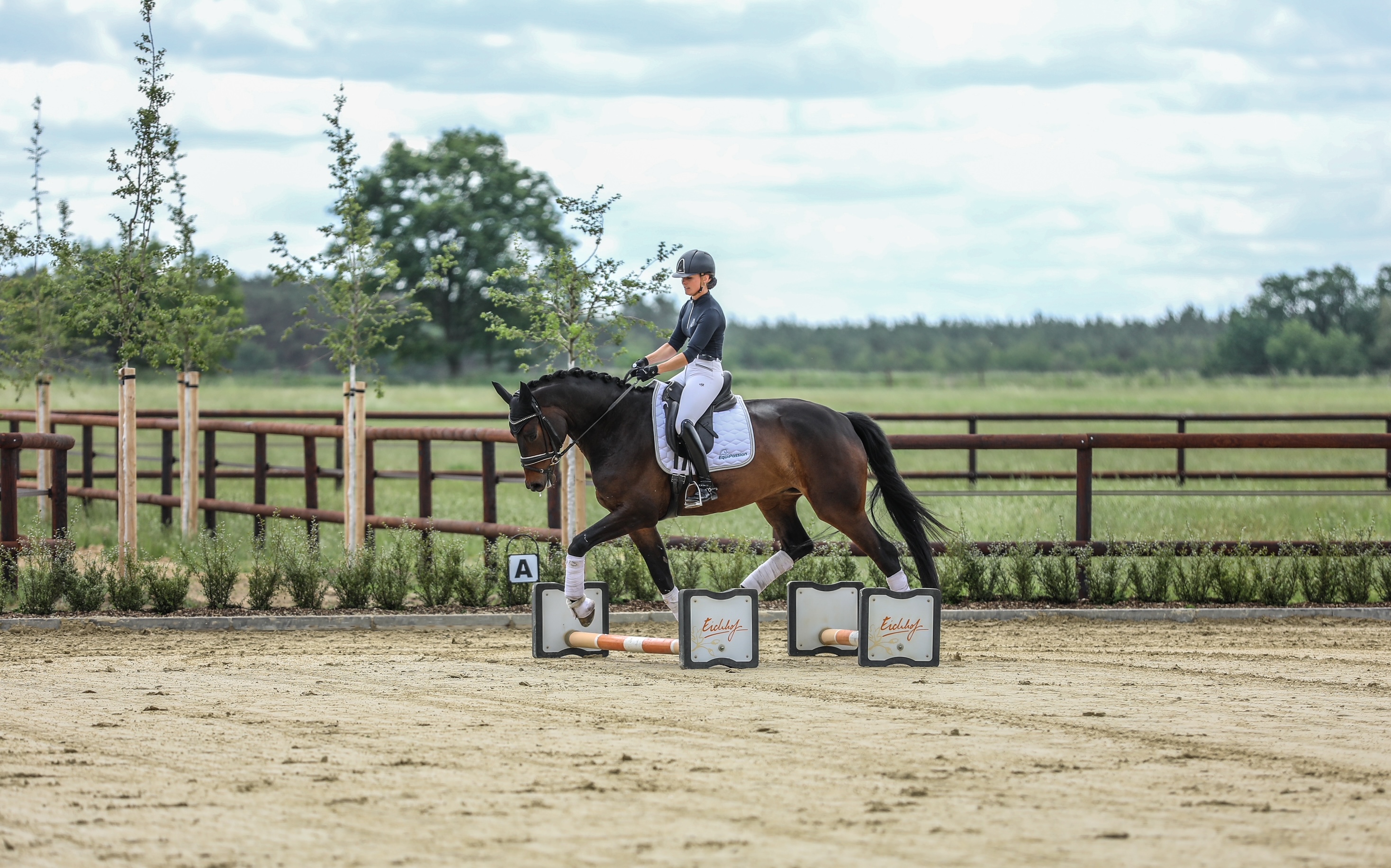
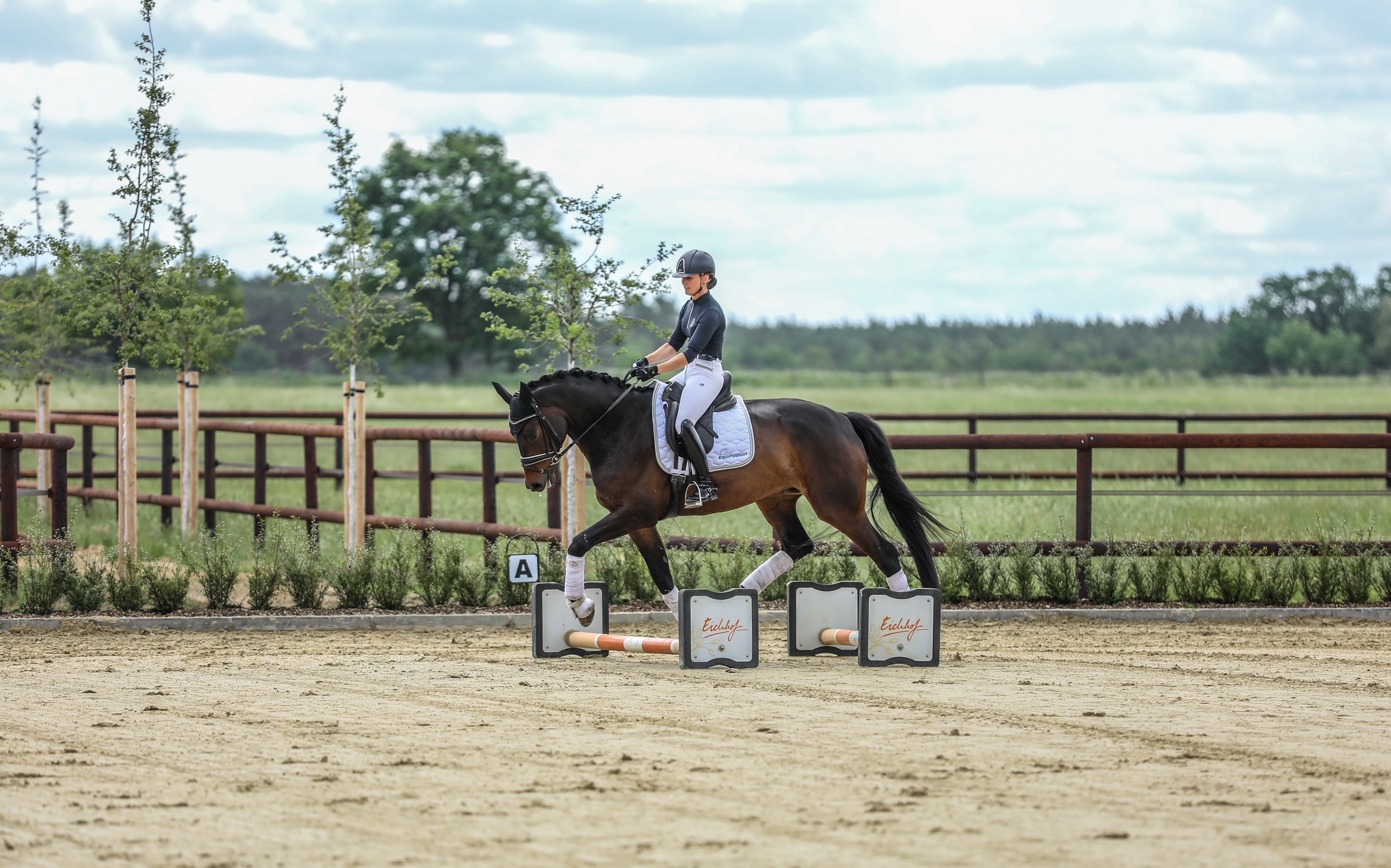
Another path: buy young horse directly from the breeder, have it started there, then bring home. This variant Eichhof Akademie offers for its Hanoverian breeding — you buy the horse early, have it grow up with us, start under saddle and, if desired, train further.
How we sell at the Eichhof
We sell horses from our own Hanoverian breeding, directly from the yard, without middlemen. Our breeding is deliberately compact — we have a manageable number of mares and only breed when the mating makes sense. More on our breeding philosophy in our posts on Hanoverian dressage bloodlines and Buying Hanoverian foals.
What you get at the Eichhof: full studbook information, rearing in homogeneous groups since birth, continuous farrier history, early human contact, classical FN training by a permanent team. What you don’t get: a broad selection offer of 20 horses to choose from. We sell few horses per year, but with full transparency.
If you are considering whether a horse from our breeding fits you, arrange a viewing. We discuss your requirements in an initial conversation in advance — and honestly say whether a fitting horse is currently available, or whether we have to refer you to the next foal year.
Breeder vs. dealer at a glance
| Aspect | Direct sale from breeder | Sale via dealer |
|---|---|---|
| Selection | Limited (1-5 horses) | Broad (15-30 horses) |
| Depth of information | Maximum (since birth) | Often limited |
| Mare visible | Yes | Rarely |
| Training continuity | High | Changing |
| Price structure | Direct, often somewhat cheaper | With dealer margin |
| Quick availability | Rare | Frequent |
| Relationship after sale | Often long-term | Mostly transactional |
| Risk of masked problems | Low | Higher |
| Ideal for | Long-term buyer with time | Need-based buyer with profile |
Further reading
- Hannoveraner Verband (main site, in German) — the official Hanoverian studbook
- Hannoveraner Verband — Studbook registration (in German) — procedure of official studbook registration and assessment
- FN-Shop — Horse purchase model contracts (in German) — official FN model texts for private and commercial purchases
- FN — Horse purchase and consumer-sale law (in German) — legal framework when buying from a commercial provider (dealer)
- Bundestierärztekammer — X-ray guideline 2018 (in German) — standards of the pre-purchase examination, valid for direct and dealer purchase
Written by Franziska Gutsche, owner of Eichhof Akademie and Hanoverian breeder. We sell exclusively horses from our own breeding — directly, without middlemen, with full transparency about mare and rearing conditions.
Questions & Answers