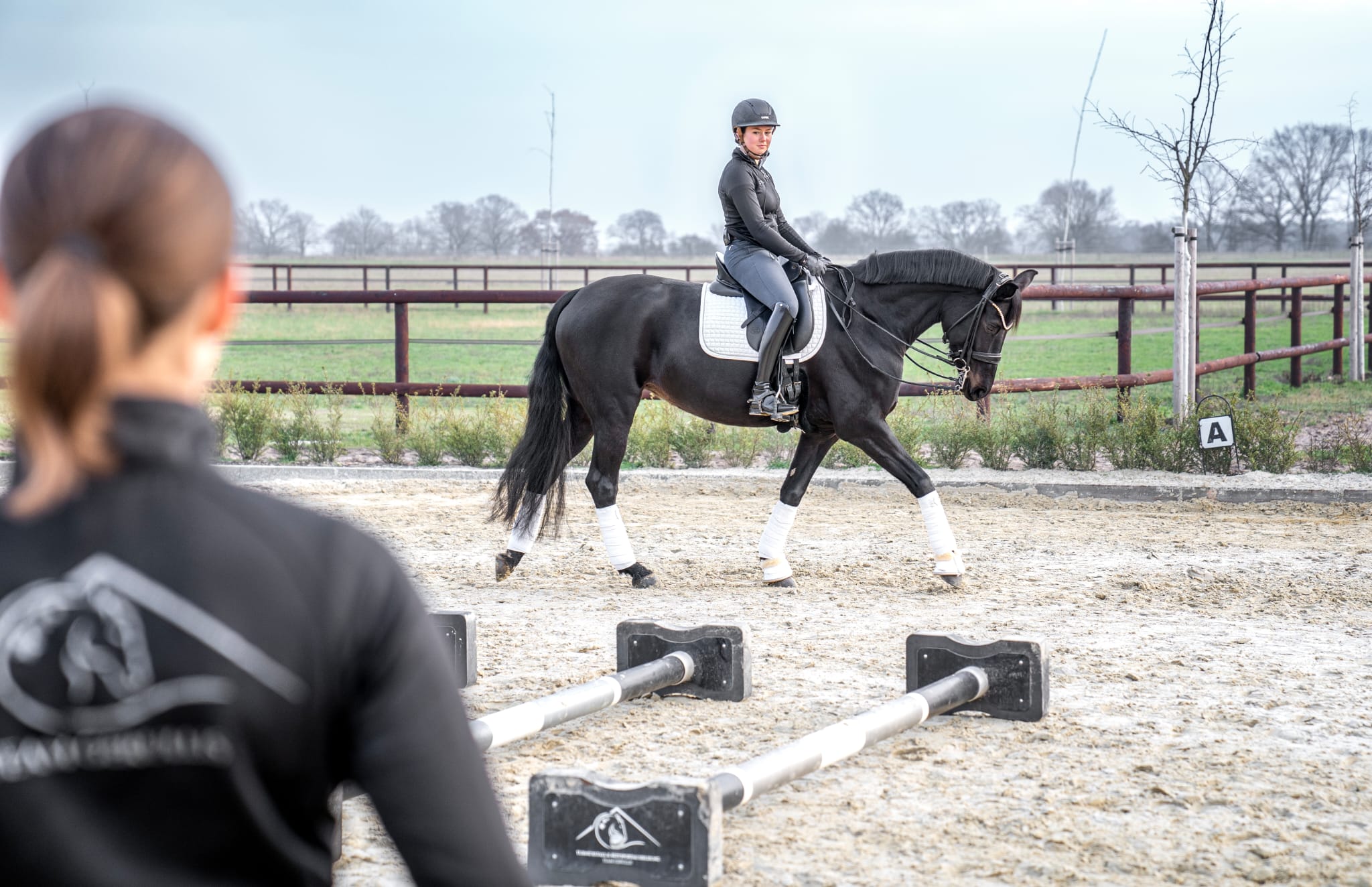
Dressage training in Berlin and Brandenburg: horse, rider, academy
At a glance
- Eichhof Akademie deliberately trains beyond pure dressage — in dressage, jumping, eventing, seat lessons and horsemanship — on a professionally equipped facility in Schenkenhorst.
- Clinics with internationally respected trainers like Karin Lührs (Grand Prix), Christoph Hess, Conny Faste (movement studies) and Alfonso Aguilar (horsemanship) are explicitly open to outside riders too.
- Regular lessons and professional schooling are reserved for boarders; spectators are warmly welcome at every clinic.
Looking for dressage training in Berlin or Brandenburg that is more than a standard hourly lesson is not entirely easy. There are many yards but few that genuinely combine depth in classical riding theory with modern horse care — and offer not only dressage but a broad training philosophy. The Eichhof Akademie in Schenkenhorst is built precisely on that profile.
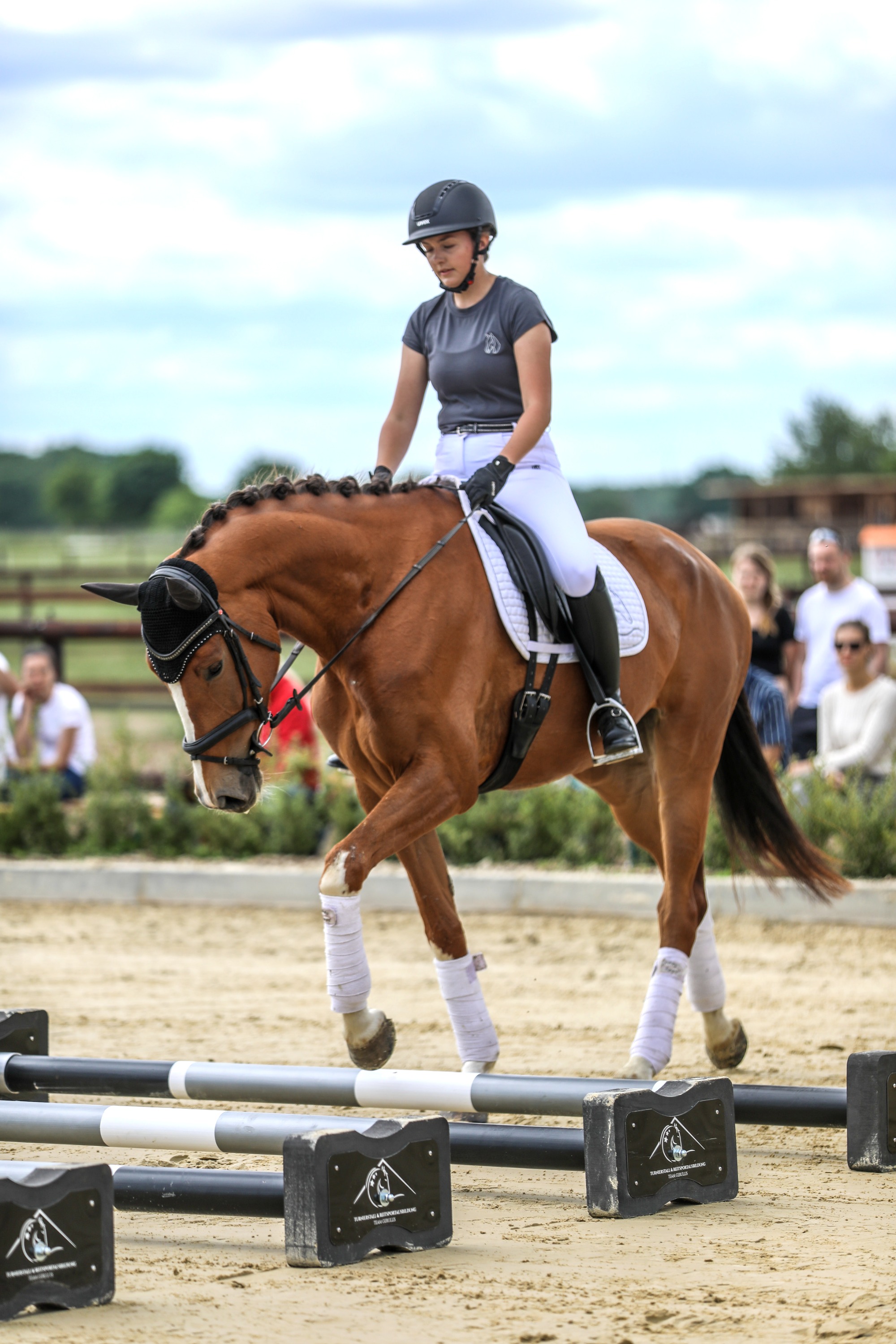
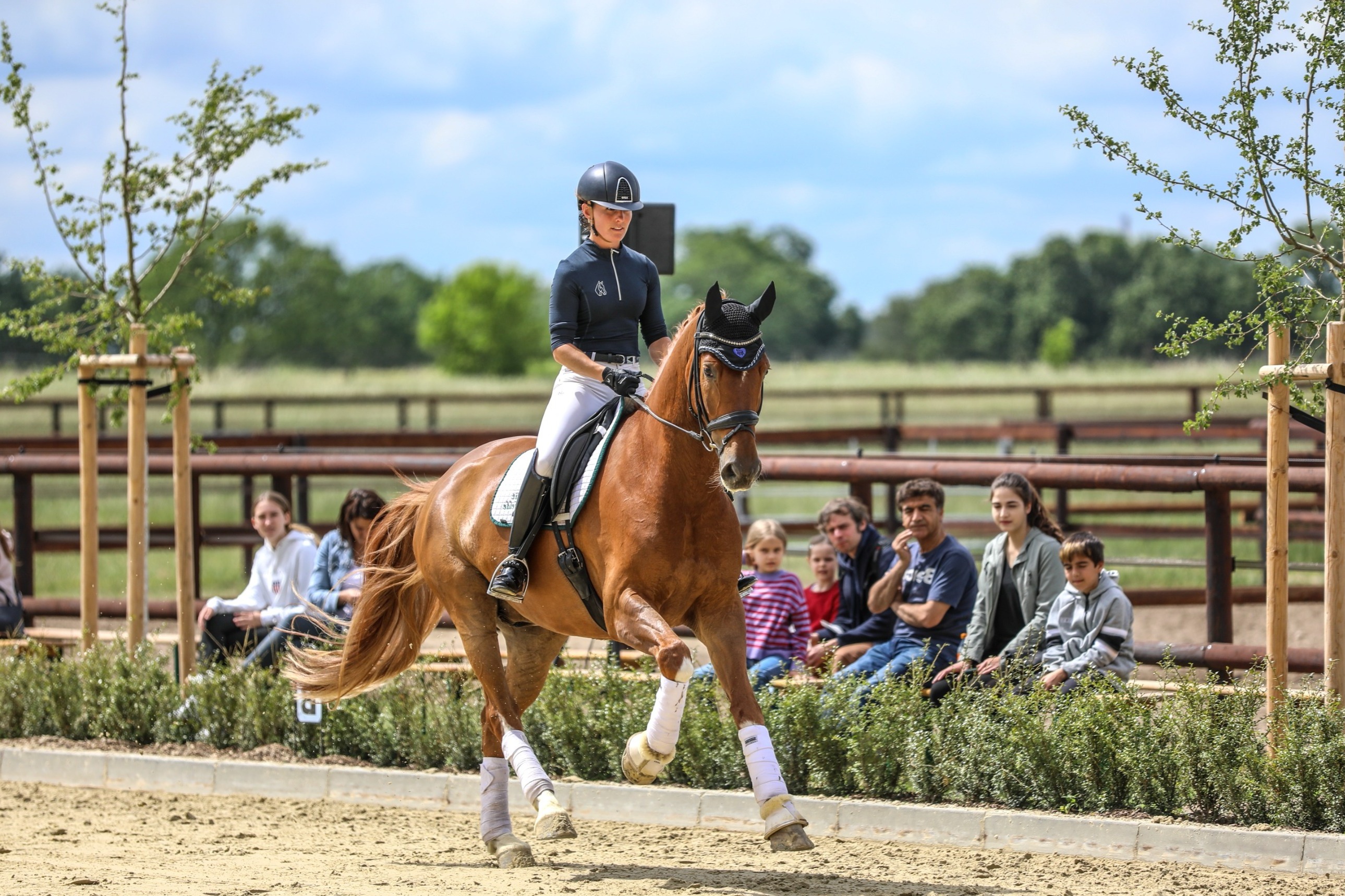
Dressage training in Berlin and Brandenburg today should deliver more than the classic forward-and-down: seat lessons, movement studies, groundwork, and an understanding of the horse’s airway and movement health belong to the picture. At the Eichhof Akademie in Potsdam-Mittelmark we train in dressage, jumping, eventing, seat lessons and horsemanship, complemented by a clinic programme with internationally respected trainers. The yard sits about 20 minutes from Berlin’s Kurfürstendamm.
What follows is how our training programme is structured, which trainers work regularly with us, and how to recognise good training in everyday life.
Training at the Eichhof — an academy in the literal sense
The name „Akademie” is deliberate. An academy is not a riding yard where you tick off your hours but a place where horse and rider grow over years. That logic shapes our programme: we think in development paths, not in single lessons.
In practice that means:
- Training that builds. From first starting under saddle to Advanced (S) level dressage, the structure is continuous. Riders don’t bounce between unclear methods; they work with one consistent approach.
- Horse and rider trained together. We don’t separate them. Anyone with seat issues will have them on the best horse — and vice versa.
- Continuity through a permanent team. Master Equine Manager Pia Anina Gerullis and Grand-Prix-level dressage trainer Kim Jesse work regularly on the yard, complemented by owner Franziska Gutsche.
The training facility itself is built for this programme: indoor arena 20 × 40 m with ebb-and-flow surface, dressage arena 20 × 60 m with ebb-and-flow, second dressage arena 20 × 55 m, two lunge rings and a one-hectare jumping field. Consistent training is possible even in winter and heavy rain.
Disciplines: not only dressage
A point that gets lost on many yards: we train deliberately broadly, not just dressage. There are sporting and health reasons.
Sportingly: a horse that also jumps, hacks out and knows groundwork develops a different looseness under saddle than a pure arena horse. More movement patterns, more confidence, less monotony.
Health-wise: one-sided loading produces one-sided musculature and, long-term, wear-and-tear. Versatility is the best wear-prevention we know.
Concrete disciplines we train:
- Dressage — from first loosening to Advanced (S) level; seat lessons and aids as a constant focus.
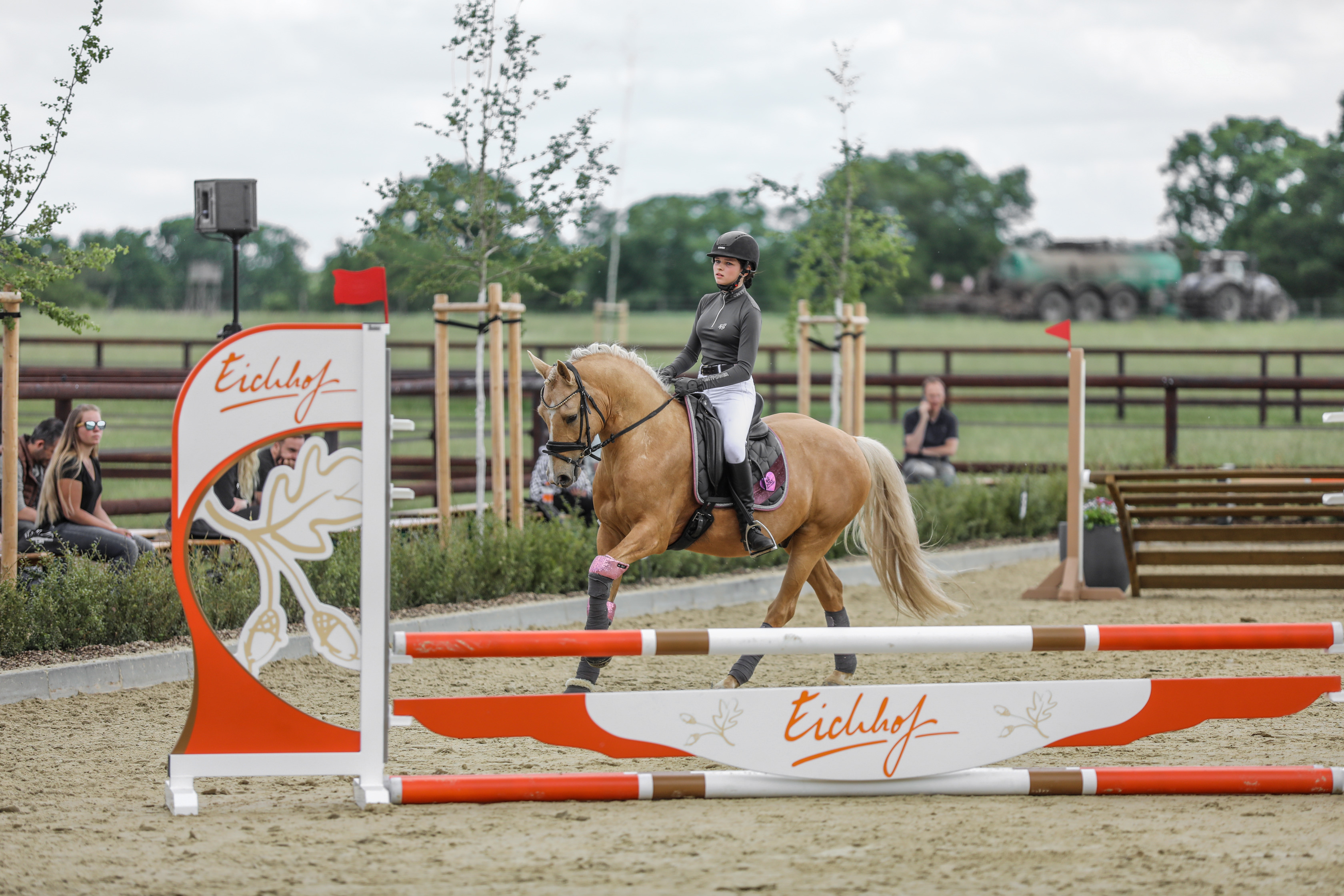
- Jumping — on the one-hectare jumping field, with a clear focus on canter quality and stride feel rather than height.
- Eventing — cross-country days with Pia Anina Gerullis, mobile cross-country obstacles, indoor or outdoor depending on weather.
- Seat lessons — perhaps the most underrated lever in amateur sport. Better seat lessons replace three lessons on the wrong horse.
- Horsemanship — groundwork, equine communication, understanding of equine psychology.
Clinics with internationally respected trainers
The clinic programme is the heart of our training academy and the place where outside riders are welcome. We deliberately chose against the one-off „star event” and for a recurring programme, because learning works over time, not in a single day.
Our regular guest trainers:
- Karin Lührs — dressage clinic. Grand-Prix rider and trainer, more than 80 wins at S level, judge through S level. Her clinics are aimed at ambitious riders looking for clean dressage work in the classical sense.
- Christoph Hess — riding clinic. One of Germany’s most respected riding sport experts. Clinics from Elementary (L) level, with a clear mix of practical session and theory.
- Conny Faste — movement clinic. Specialist in biomechanics between rider and horse. Anyone who wants to analyse and improve their seat will find the right approach here.
- Alfonso Aguilar — horsemanship. Internationally recognised expert in groundwork and equine communication. Day clinics from roughly 9:00 to 16:30.
- Pia Anina Gerullis — cross-country day. A versatile training day in the cross-country setting, open from beginners to advanced riders.
Current dates, trainer profiles and booking information are on our clinic page.
Professional schooling for the young horse, corrective work for the established one
In addition to riding lessons, we offer professional schooling for our boarders. That includes:
- Starting young horses — gently, over several weeks, with clear breaks. More on that in Have a young horse started.
- Full training board for horses worked daily in further training.
- Part training board as a complement to the owner’s own riding — usually two to three sessions per week.
- Corrective training for horses that have been ridden poorly or one-sidedly in the past.
We deliberately don’t run three-week programmes that „finish” a horse. Solid training takes months, not weeks. That patience pays back across the entire riding life of the horse.
Seat lessons and horsemanship — the foundation few yards offer
Anyone who wants to step up to the level of an Eichhof clinic needs a foundation. That foundation is built in everyday life, not in the clinic. Two building blocks are decisive.
Seat lessons are the honest answer to most riding problems. A rider with a stiff pelvis, fixed knee or hollow back cannot bring even the best horse into looseness. We therefore make seat lessons a regular part of weekly lessons — usually as a 20-minute block at the start, often on a school horse, to step away from your own horse and concentrate on your body.
Horsemanship is the term for what happens before and after riding. How does a horse behave on the ground? How does it react to uncertainty? Anyone who understands this rides more easily — and corrects in the stall, not in the saddle.
If you are considering whether our academy fits, come as a spectator to one of our next clinics. Or contact us directly — we take time to answer your questions.
Clinic formats at a glance
| Trainer | Format | Level | Outside riders |
|---|---|---|---|
| Karin Lührs | Dressage clinic, 45-min sessions | From Elementary (L) | Welcome |
| Christoph Hess | Riding clinic, 40 min ride + 20 min cool-down | From Elementary (L) | Welcome |
| Conny Faste | Movement clinic, 45 min | All levels | Welcome |
| Alfonso Aguilar | Horsemanship, ca. 9:00-16:30 | All levels | Welcome |
| Pia Anina Gerullis | Cross-country day, full day | Beginners to advanced | Welcome |
Further reading
- Training scale: practical guide — the six stages of classical dressage training
- Classical dressage vs. classical-baroque riding art — methods and positioning
- From A to S: Roadmap of dressage training — realistic time and costs through Advanced (S) level
- Choosing a riding clinic in Berlin & Brandenburg — trainer and format selection
Questions & Answers