Buying a Hanoverian dressage horse: directly from the breeder in Brandenburg

At a glance
- Eichhof's breeding programme produces Hanoverians with a clear focus on character, rideability and even temperament — not on showy looks or eye-catching freelance movement.
- Rearing, starting and sale all happen in one place: you can see the horse from the foal stage to the ridden four- or five-year-old at the same yard.
- Trial rides and consultations in Schenkenhorst (Potsdam-Mittelmark), about 20 minutes from Berlin's Kurfürstendamm — direct contact with the breeder herself.
Buying a Hanoverian dressage horse is a decision with weight — financially, emotionally and for your sport. Starting at the breeder rather than the dealer eliminates a whole row of question marks that are hard to clarify later. That is also why a growing circle of buyers who care about transparency keep returning to the Eichhof.
When you buy a Hanoverian directly from the breeder, you get a horse with a documented history — rearing, character development, starting under saddle and sale all in one hand. The Eichhof breeding farm in Schenkenhorst (Potsdam-Mittelmark) breeds Hanoverians with an emphasis on character, rideability and even temperament. You see our horses in the breeding programme, in starting under saddle and in further training at the neighbouring Eichhof Akademie — all in one place, about 20 minutes from Berlin’s Kurfürstendamm.
In what follows we explain why the Hanoverian remains one of Europe’s leading dressage breeds, what defines our approach, and what really matters when you buy.
Why the Hanoverian for dressage
The Hanoverian is Germany’s largest warmblood breed and has been deliberately bred for dressage and jumping for decades. What defines a Hanoverian is not a single trait but a combination shaped over generations: a swinging back, balanced canter, clear leg movement and — crucial for everyday riding — willingness to be trained.
In the Olympic year 2024, ten of the world’s top twenty dressage horses came from German warmblood breeding, with Hanoverians once again leading. That sporting depth shows not only at the top — it is also felt in amateur sport, because a well-bred Hanoverian brings more reserve capacity than most other breeds.
For more on the genetic depth and the most important lines, see our piece Hanoverian dressage lines.
Character first — the Eichhof approach to breeding
Anyone searching online for „dressage horse for sale” sees, within ten minutes, a row of slickly cut videos: horses in free run, with overstated trot, in dramatically lit footage. That is sales, not horse. We take a different route.
Three principles shape Eichhof breeding:
- Character before looks. We select matings whose mothers and grandmothers have been even-tempered, willing learners and honest in real work. A horse who is a reliable partner for fifteen years is worth more than one who looks spectacular at three and is restricted in rideability by eight.
- Rearing in groups. Our foals grow up in homogeneous groups — that shapes social behaviour and makes later starting under saddle easier. A horse who never learned to deal with other horses is often difficult under the saddle later.
- Starting without pressure. We work with our youngsters at the pace they allow. Anyone who pushes a horse to „finished” status in six weeks is buying lifelong tension — physical and mental.
This logic is reflected in our training programme, where the same logic applies: time and patience as methodological values, not decorative ones.
From foal to ridden horse: what you can see at our yard
The biggest advantage of a direct purchase is the continuous observation of the horse. When you trial-ride a four-year-old with us, we have known it since its first day. We know how it ran as a foal, what its temperament was at weaning, how it coped with starting.
Specifically, you can experience here:
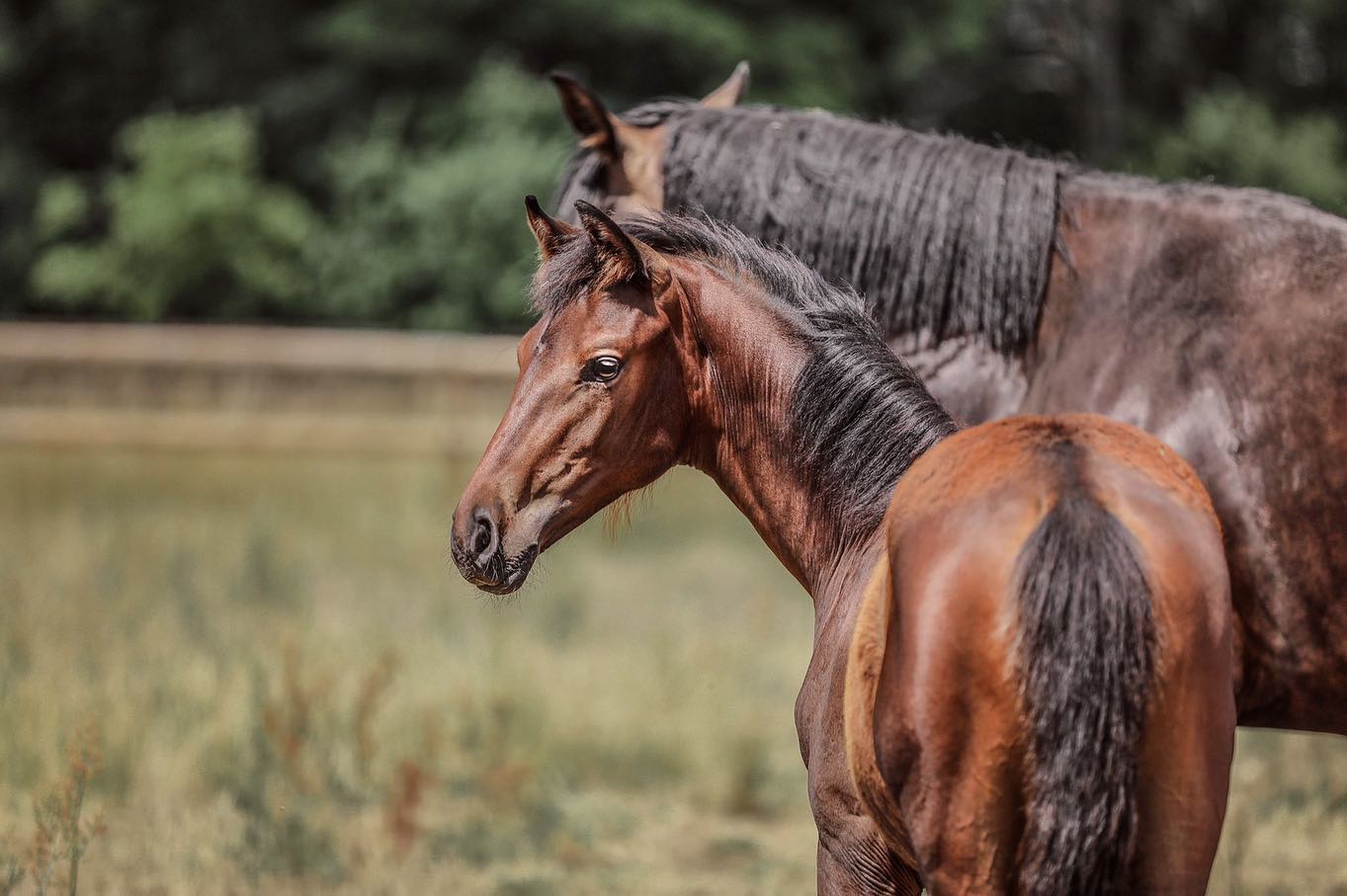
- Foals on the ground — character, joy of movement, behaviour with humans.
- Weanlings and yearlings in the group — social behaviour, robustness, growth pattern.
- Three- and four-year-olds in starting — response to first aids, willingness to learn, physical maturity.
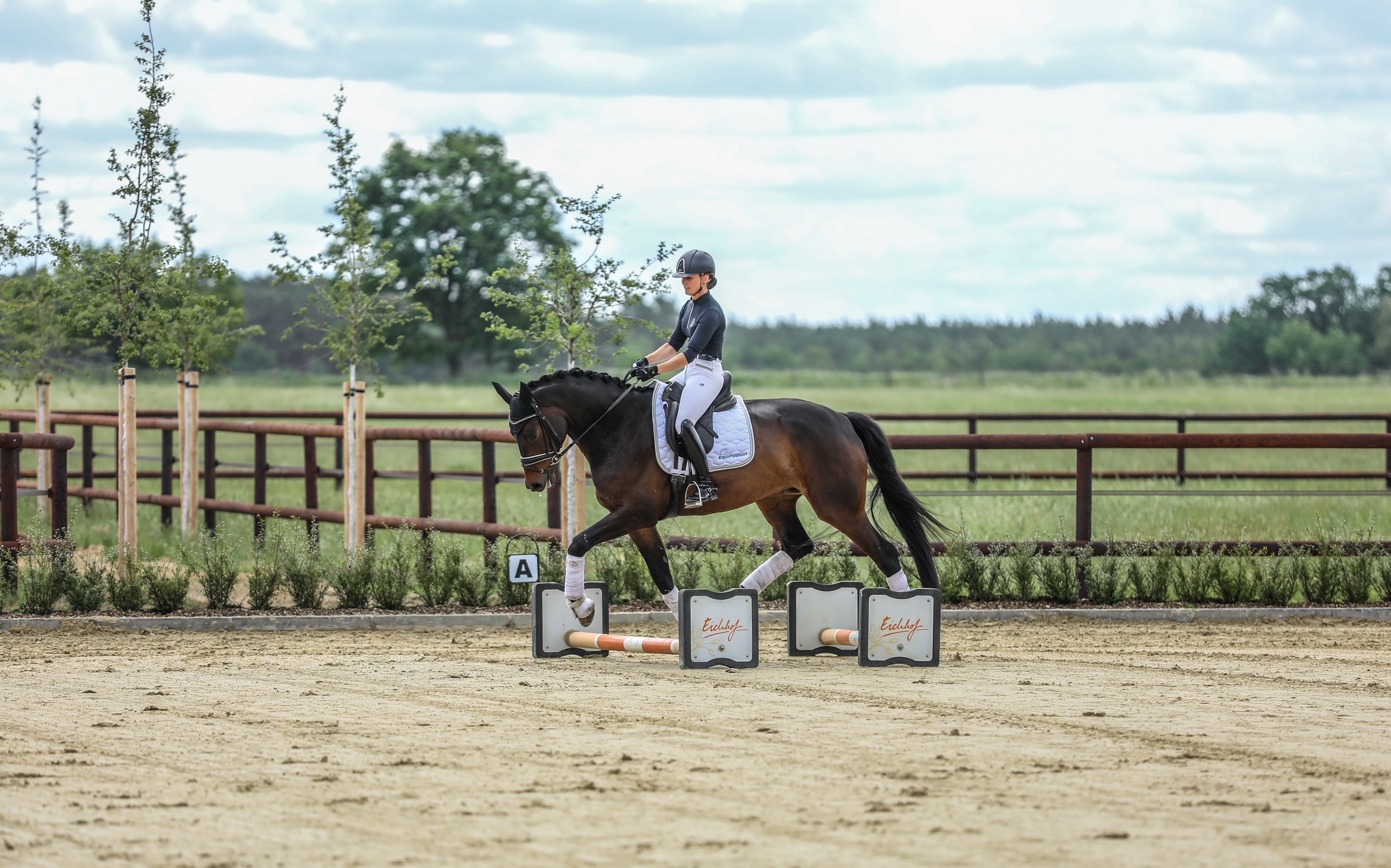
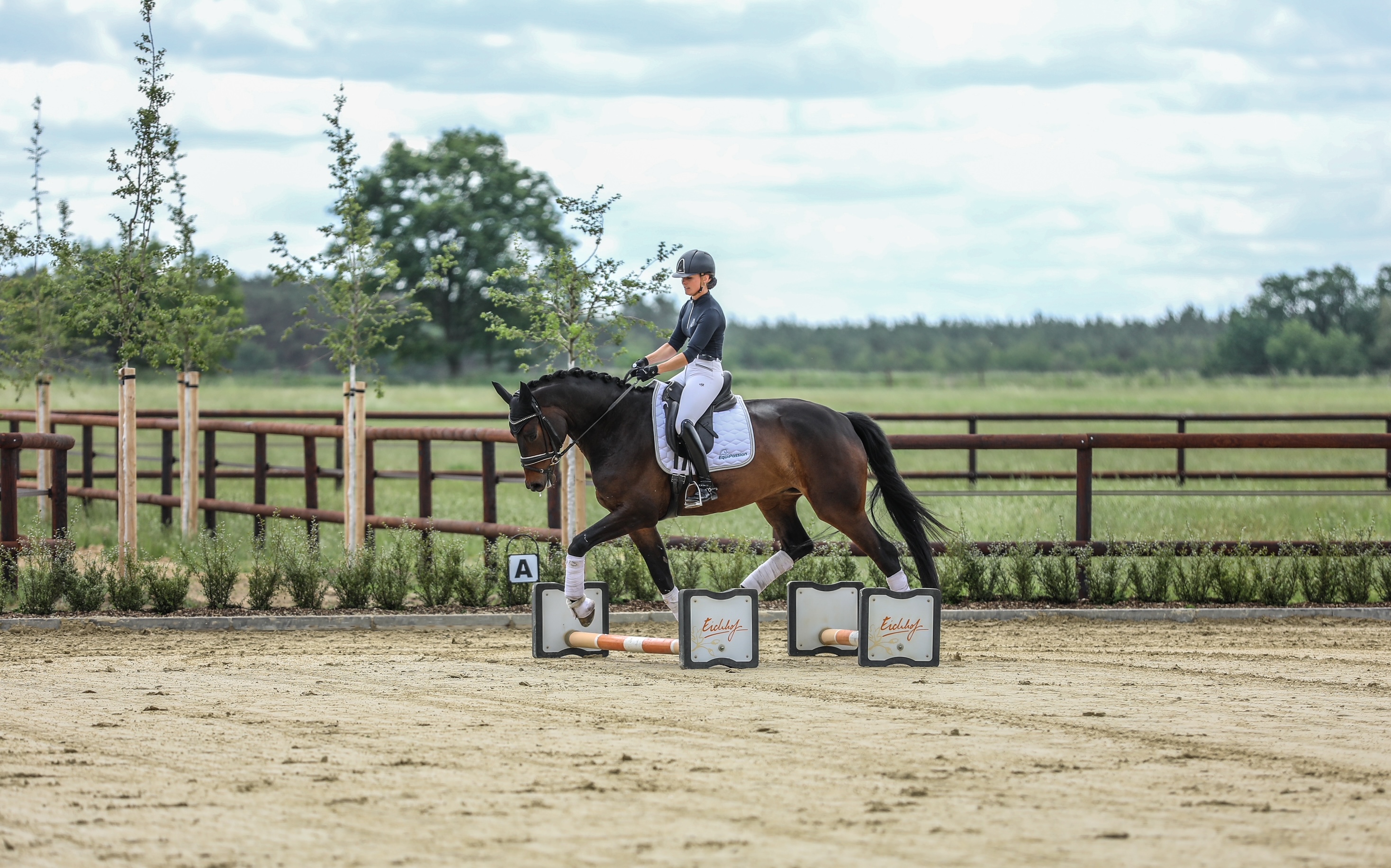
- Ridden four- to six-year-olds — training level, feel under saddle, suitability for you as a rider.
This visibility is the point where a private breeder is superior to the dealer. We don’t sell every horse to every hand — when rider and horse don’t fit, we say so. Better a postponed sale than an unhappy match.
Trial-riding in Schenkenhorst — how it works with us
A trial ride at Eichhof is not a stop-watch performance. We take time. Typical sequence:
- Pre-call. We talk in advance about your riding ability, your goals, your current yard, your training philosophy.
- Demonstration ride. A member of our team rides the horse first — you see it in its everyday work, not in a test situation.
- Trial ride. You ride the horse yourself, at your pace. If you feel uncertain, our trainer can be on standby.
- Conversation after riding. We talk openly about what we saw — strengths, weaknesses, development paths.
- Pre-purchase exam. You arrange the vetting with a vet of your choice on our yard. We share all medical information we have, openly, before you commission the exam.
If you are still unsure what really matters when buying a horse, our piece What to watch for when buying a dressage horse helps.
What to watch for when buying a Hanoverian
Three points we recommend as the most important filters, drawn from two decades of breeding and sales experience:
- Character before movement. A horse with good character and average movement will keep developing under correct training — the reverse becomes hard.
- Test rideability, don’t dream it. Ride the horse yourself, on multiple days where possible. Videos flatter; the saddle tells the truth.
- Understand the history. Who started the horse? Where has it lived since weaning? If those questions remain unclear, you are buying a riddle with a pedigree.
If you are interested in our currently available horses, they are listed on our breeding & sales page — with status (raw, started, ridden), pedigree and a short character note. For interest, contact us for a viewing.
Status of Eichhof horses for sale
| Status | Description | Suitable for |
|---|---|---|
| Raw | Not yet started, in rearing or pre-starting | Professionals and buyers with a training programme lined up |
| Started | First weeks under saddle, basics in place | Riders with trainer support, young riders accompanied |
| Ridden | Four- to six-year-old, in further training | Amateurs with experience, professionals as a development horse |
Further reading
- Hanoverian foal to buy in Brandenburg — prices, selection and procedure for foal purchase
- Pre-purchase examination for a dressage horse — X-ray guideline 2018 and risk degrees
- Horse from breeder or dealer — honest comparison
Questions & Answers