Hanoverian dressage lines: what really matters

At a glance
- Hanoverian dressage breeding is built on a manageable number of formative stallion lines — De Niro, Don Schufro, Florencio, Sandro Hit, Don Frederico, Fürst Heinrich and Stedinger are among the most influential.
- Mare families are routinely underrated in sales, yet they shape character and rideability often more strongly than the sire — Eichhof's programme deliberately builds on character-stable maternal lines.
- Lines are an indication, not a guarantee: the individual horse decides, not the pedigree stamp.
Anyone reading dressage breeding seriously knows the phenomenon: a stallion’s name comes into fashion, three years later the world is full of his offspring, three years after that comes the disillusionment. Understanding the Hanoverian lines means looking behind these cycles — at what has actually been transmitted across generations.
Hanoverian dressage breeding works with a manageable number of formative stallion lines. De Niro, Don Schufro, Florencio, Sandro Hit, Don Frederico, Fürst Heinrich and Stedinger are the most influential sires of the last two decades. Just as important — and often underrated in sales — are the mare families: character-stable maternal lines shape rideability and disposition often more strongly than the sire stamp. At the Eichhof in Schenkenhorst we deliberately work with character-stable mares and choose matings that suit our line.
What follows is a tour of the most important lines, what defines them in practice, and how to read a pedigree without getting lost in it.
How the Hanoverian came to dressage
The Hanoverian was, for centuries, a versatile animal — carriage, cavalry, agriculture. Targeted specialisation for sport began only after 1945, when the horse disappeared as a working animal. By the 1970s the Verband was a pioneer of modern sport-horse breeding, with clearly defined goals for jumping and dressage.
The turning point for dressage breeding came in the 1990s, when stallions like Donnerhall (sire of De Niro) and later Florestan I, Fürst Heinrich and Sandro Hit shaped a new generation — with markedly improved canter, swinging back and finer responsiveness. That generation is the genetic foundation of today’s Hanoverian dressage horse.
The most important stallion lines at a glance
If you read pedigrees, you keep meeting the same names. What’s behind them?
- De Niro (Donnerhall x Akzent II). Perhaps the most formative sire of the last twenty years. De Niro offspring tend to bring: a good gait pattern, swinging back, high trainability, and in many cases an even temperament.
- Don Schufro (Donnerhall x Pik Bube I). The Olympic line through Olympic Cosmo. Hotter than De Niro, with high canter quality; in mating with a calm dam, very balanced.
- Florencio (Florestan I x Weltmeyer). Brings movement with a show character, often with high self-carriage. Mating with deliberately rideable mare families is decisive.
- Sandro Hit (Sandro Song x Ramino). A widely diffused line with many half-siblings in international sport. Strengths: trot, uphill posture. Weaknesses: can be physically demanding and needs good riders.
- Don Frederico (Donnerhall x Pik Bube I). Tends towards calmer offspring, while still highly rideable. In amateur sport, a very dependable choice.
- Fürst Heinrich (Florestan I x Donnerhall). Brings elegance and a fine mouth; the line suits sensitive riders who work with delicately dosed aids.
- Stedinger (Sandro Hit x Donnerhall). A more modern line, highly potent in transmission, requiring careful mating selection.
This list is a simplification — the genealogy interweaves, many stallions trace through multiple lines. But it gives a first orientation.
Mare families — the underrated half
Here is the point where many buyers and even breeders are careless. The sire gets the big poster in the sales presentation; the dam is often only mentioned by name.
In practice the dam shapes at least as much:
- The first months of life — nursing, learning, socialisation. A calm, secure mare raises a different foal than an anxious or aggressive one.
- Mitochondrial DNA — passed on exclusively via the dam, influencing metabolism and energy conversion.
- The genetic mix — the maternal stem contributes equally to half of the inheritance.
The Hanoverian Verband documents the most important mare families. At the Eichhof we deliberately work with character-stable maternal lines that have been sportively successful and healthily stable across several generations. An overview of our current broodmares and matings is on our breeding page.
The Eichhof’s breeding farm in Schenkenhorst
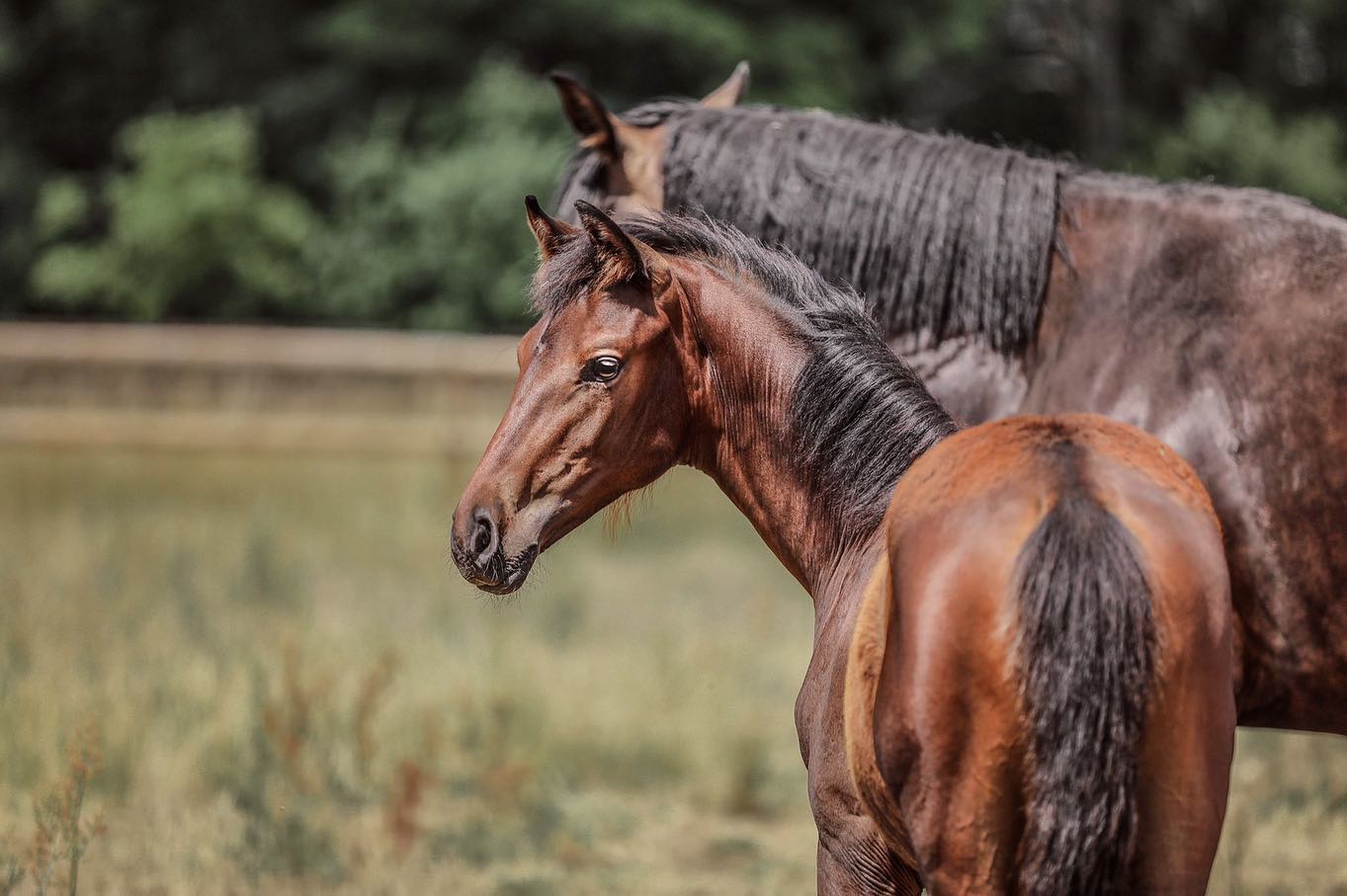
The Eichhof — Franziska Gutsche’s breeding farm — sits immediately next to the Eichhof Akademie. Here our foals grow up, here the mares are bred, here the young horses go through their first years.
Our approach follows three principles:
- Character pre-selection in mare choice. We check maternal lines across multiple generations, not just the dam herself. Anyone who has once sold a difficult mare with three daughters in the line knows why.
- Matings with substance, not fashion. We choose stallions whose character and transmission suit our line — even if they are not the stallion of the year.
- Group-rearing, not solo stalls. Foals and weanlings grow up at our place in groups, learn the social behaviour of a horse herd, and develop self-confidence and assurance — qualities that become invaluable under saddle later.
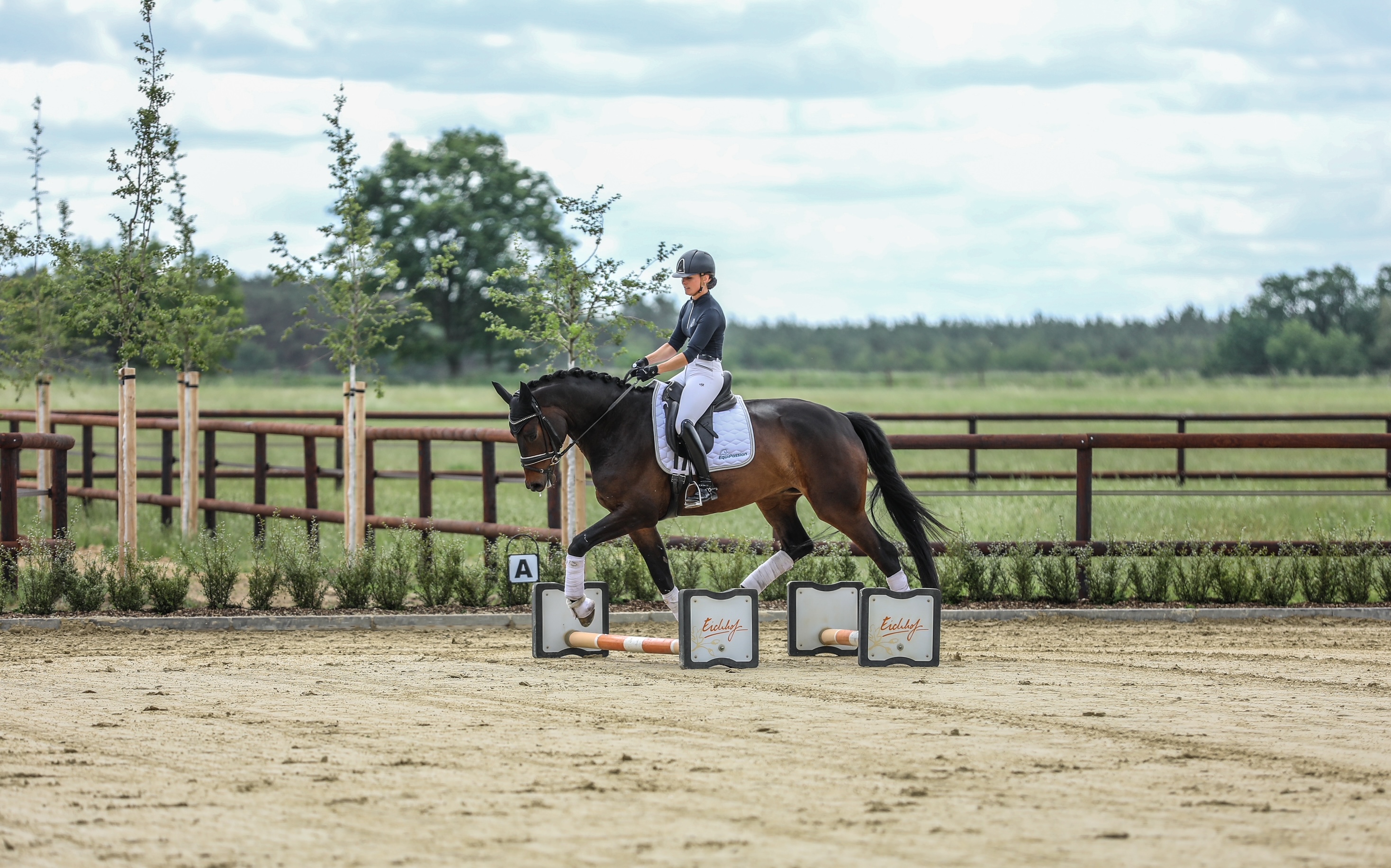
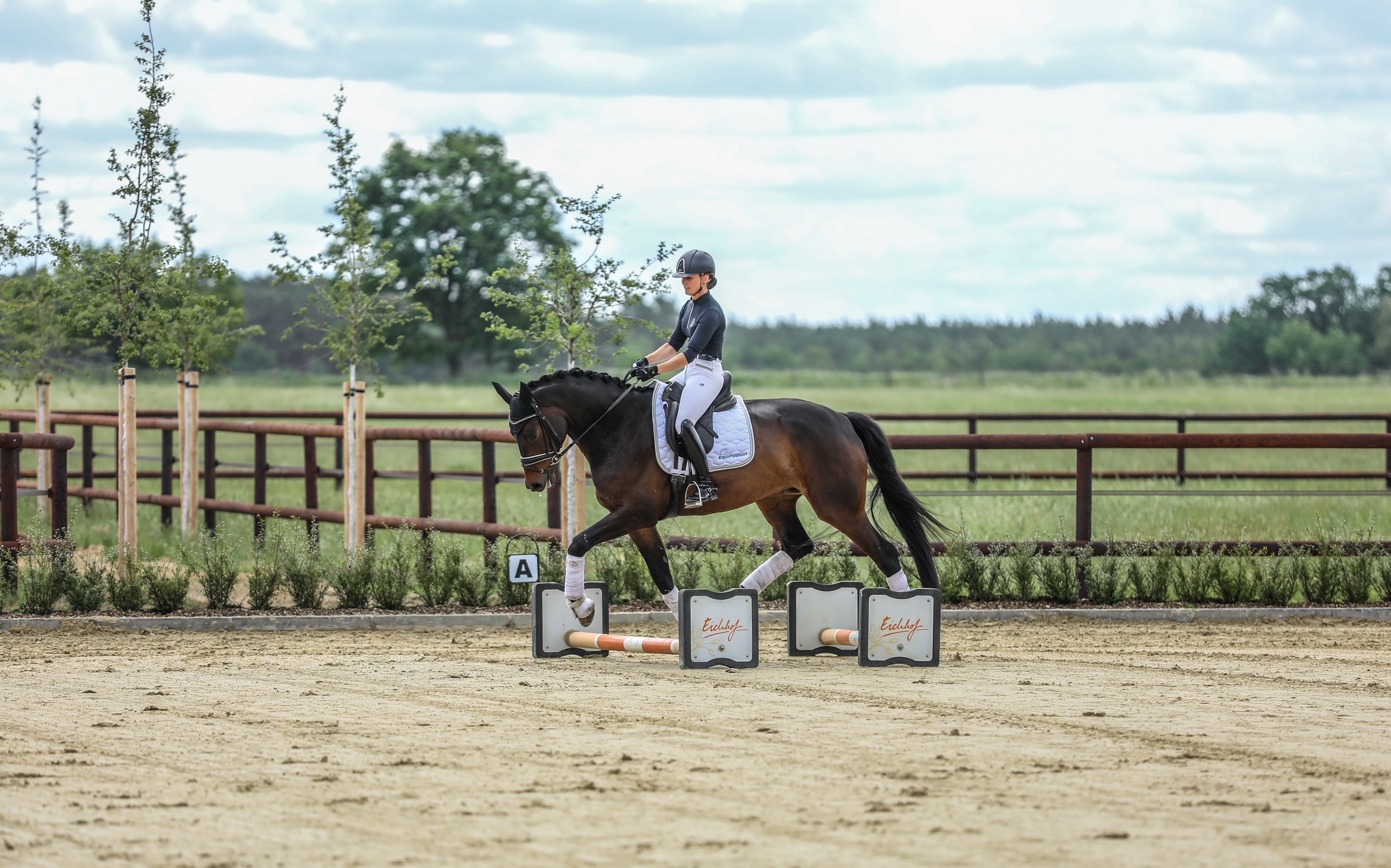
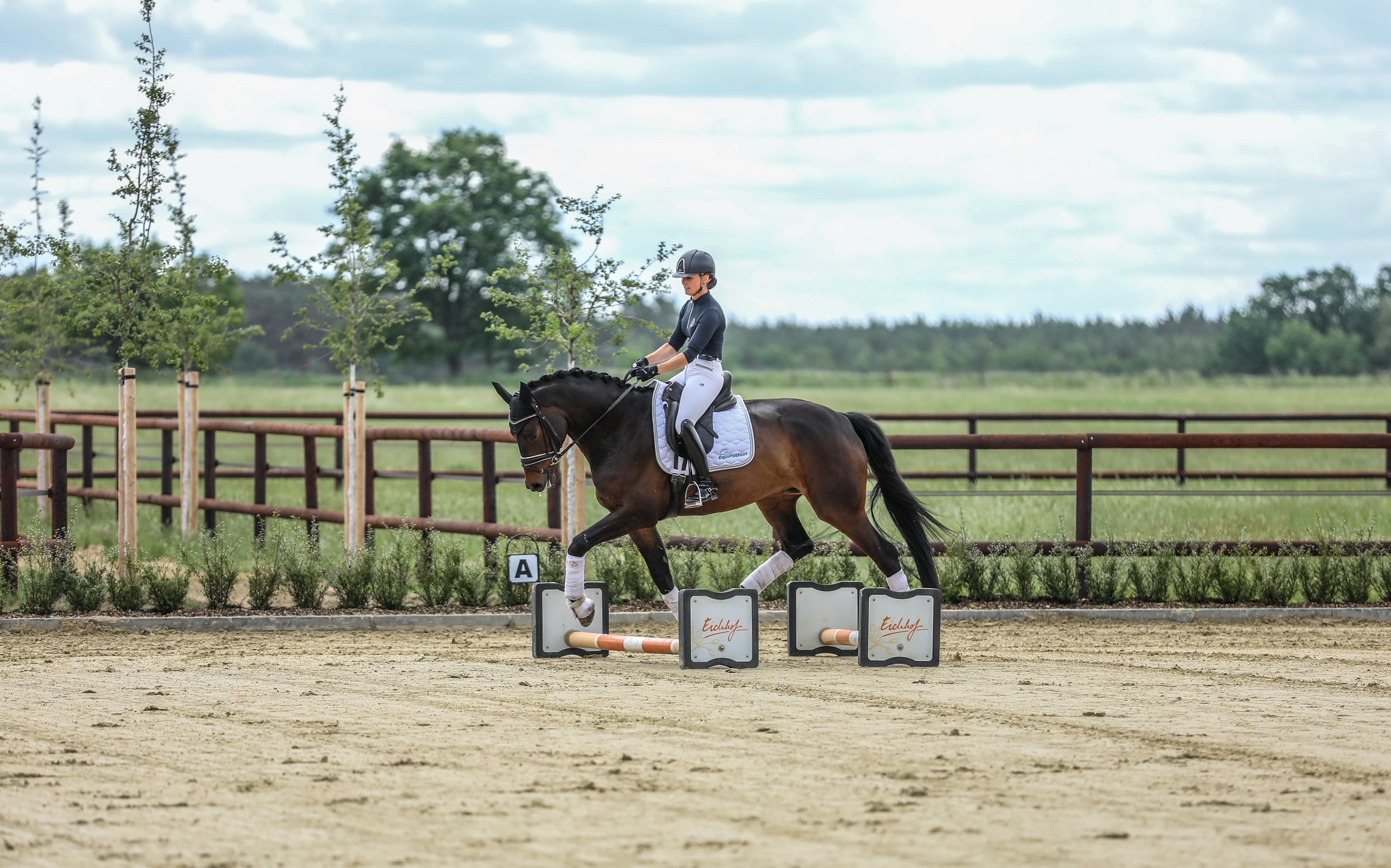
When a young horse reaches starting age, it moves to the Eichhof Akademie, where our training team gradually introduces it to ridden work. That continuity — rearing and starting in one place — is what we offer buyers with the strongest conviction.
From paper to riding lesson — what lines really tell you
Lines are an indication of disposition, not a promise. Three practical takeaways for buyers:
- Pedigree gives probabilities, not guarantees. A „De Niro son” can be a marvel or a disappointment — the maternal line and the rearing decide too.
- Read deeper than the first two generations. A pedigree only becomes truly informative across three to four generations, when repetitions and trends become visible.
- Meet the horse, not the paper. Character, rideability and physical substance can only be assessed on the living animal. More on that in our piece Buying a Hanoverian dressage horse.
If you are interested in our currently available horses or want a consultation on line selection, contact us directly.
Hanoverian dressage stallion lines compared in practice
| Line | Movement type | Character tendency | Suited for |
|---|---|---|---|
| De Niro | Swing, back action | Even, willing to learn | Amateurs and professionals |
| Don Schufro | Strong canter, hot | Sensitive, fine | Experienced riders |
| Florencio | Show trot, self-carriage | Elegant, demanding | Skilled riders with experience |
| Sandro Hit | Uphill, trot | Highly potent, broad | Professionals; good dam line essential |
| Don Frederico | Solid, swinging | Calm, highly rideable | Amateur-friendly |
| Fürst Heinrich | Elegant, fine mouth | Sensitive, fine | Riders with a delicate hand |
| Stedinger | Modern, strong push | Training-ready, demanding | Ambitious riders |
Further reading
- Hanoverian foal to buy in Brandenburg — direct sale from the breeder, procedure and prices
- Horse from breeder or dealer — what distinguishes the two paths
- Pre-purchase examination for a dressage horse — what really is examined before purchase
Questions & Answers