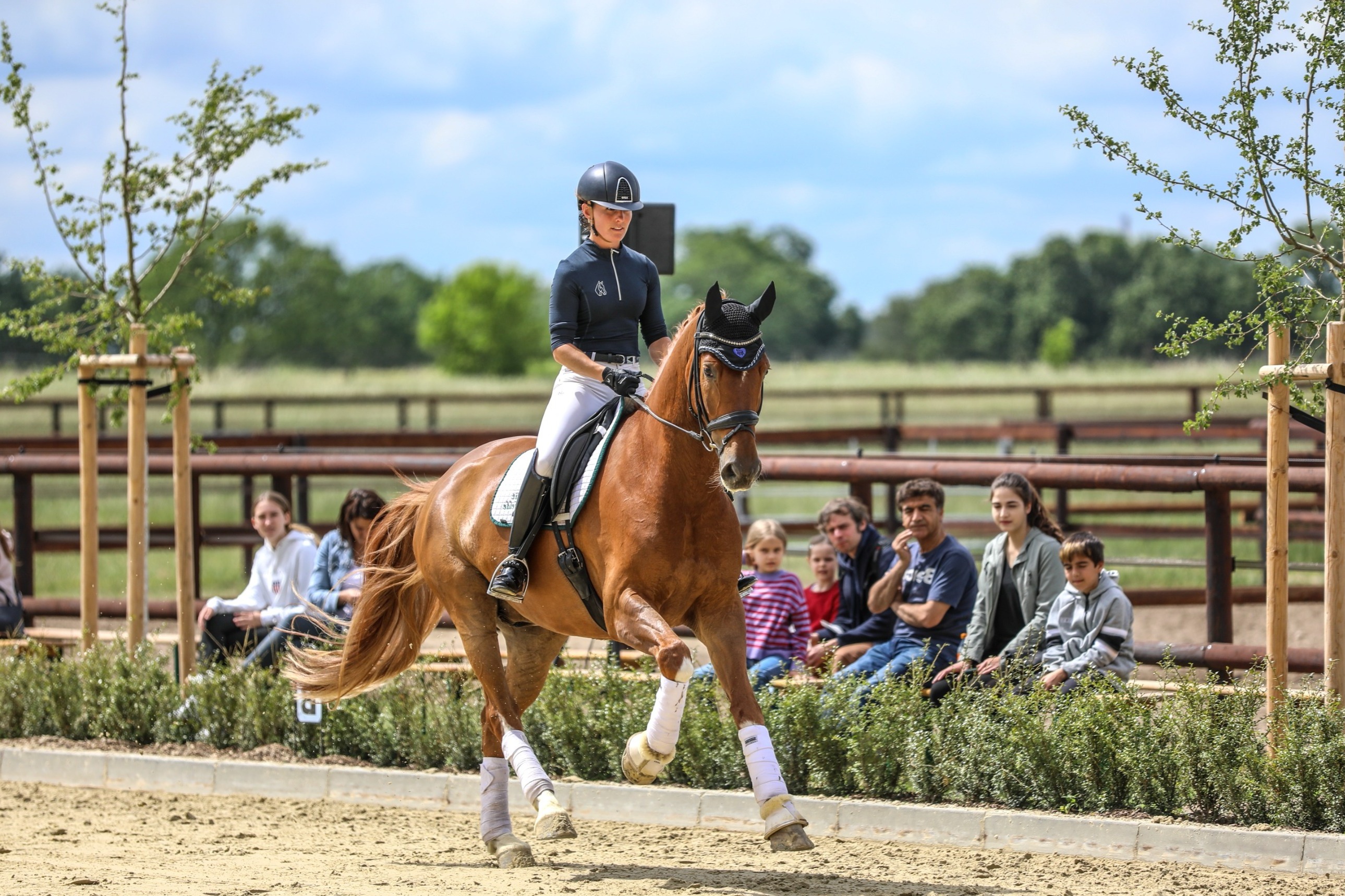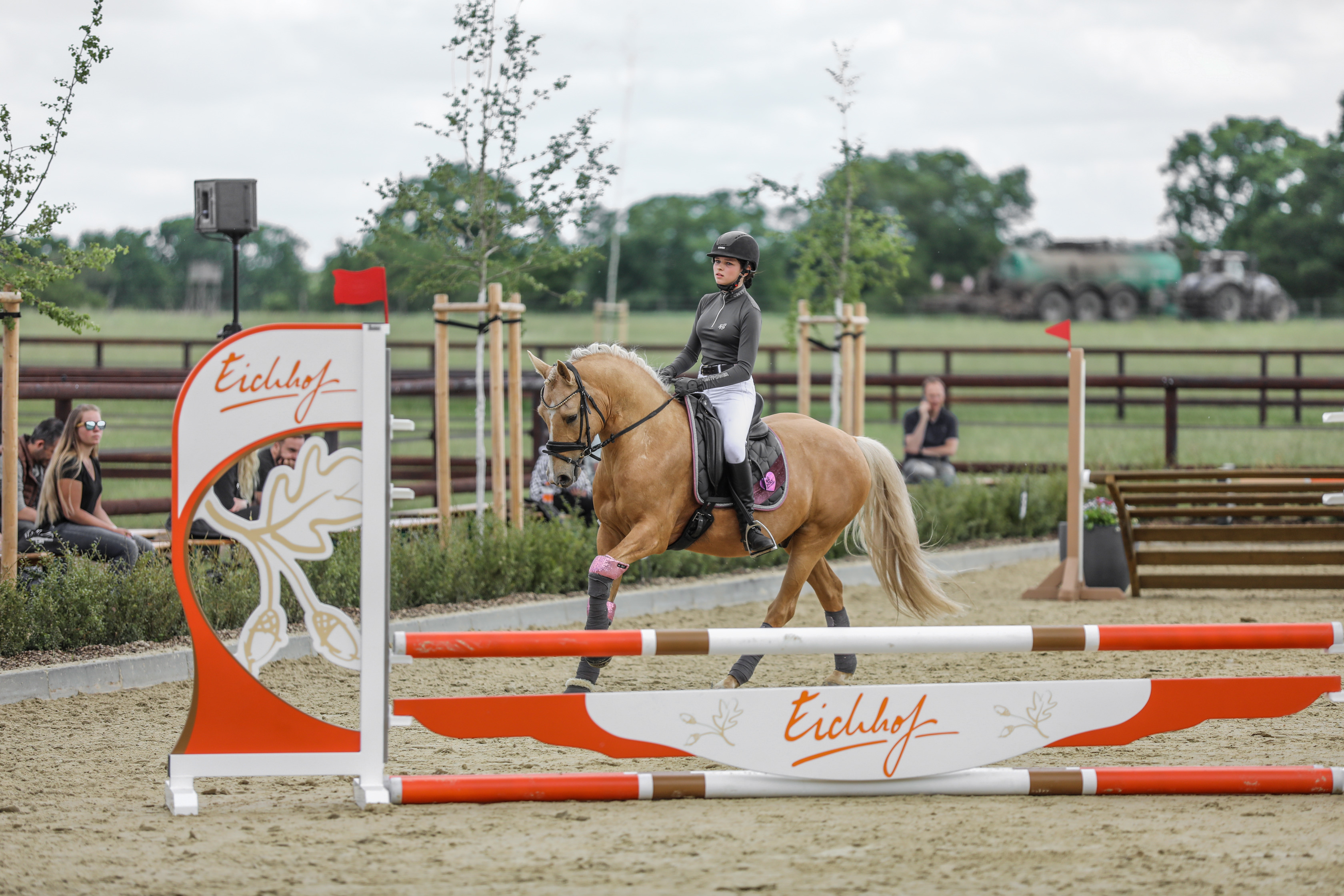
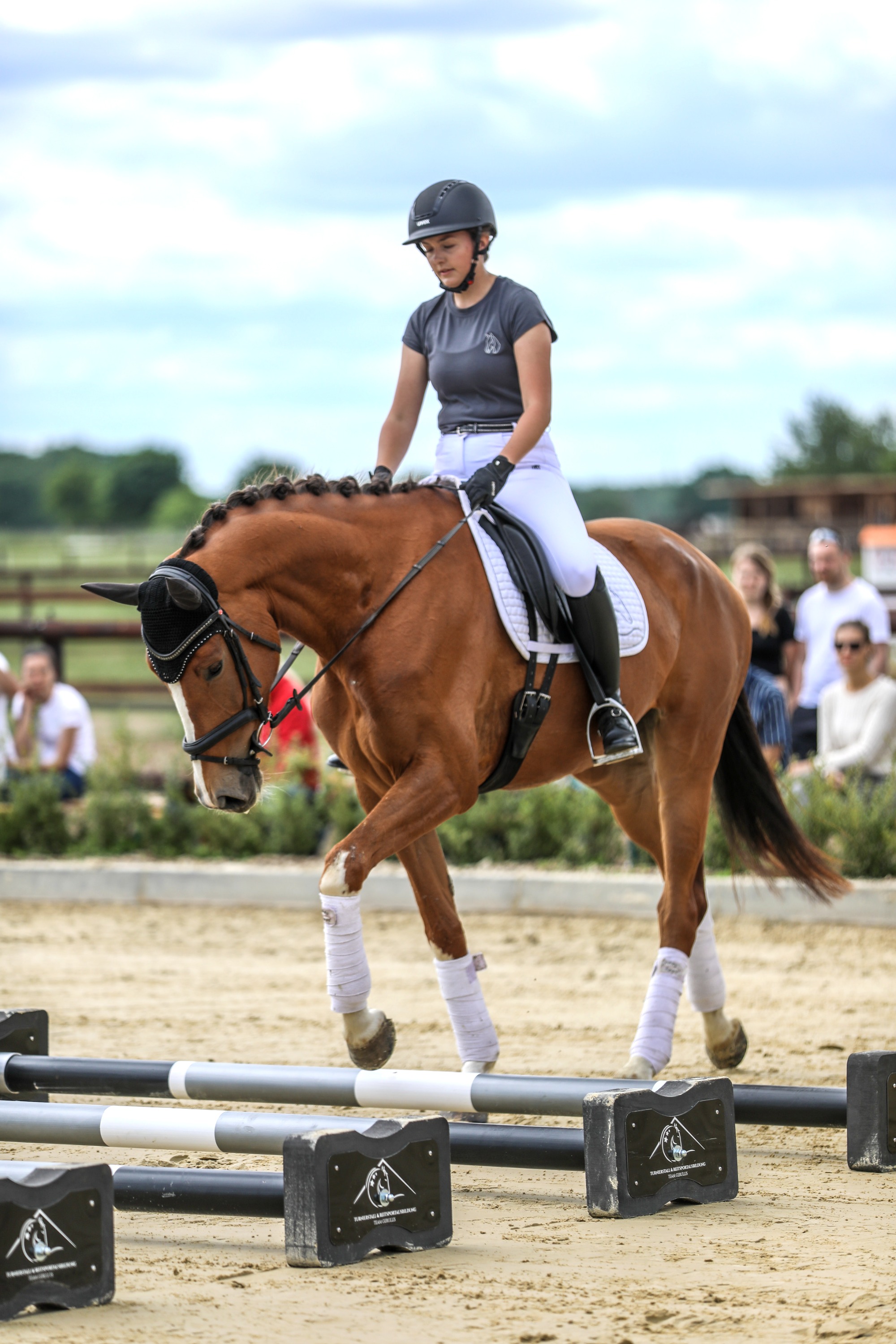
Riding clinic with Christoph Hess, Karin Lührs and Alfonso Aguilar: what you really take home
At a glance
- Clinics with Christoph Hess, Karin Lührs and Alfonso Aguilar have three distinctly different profiles — anyone who chooses the right format gets more from two days than from twenty lessons at home.
- The biggest added value comes not in the individual session but in preparation and follow-up — the hours before the clinic shape how much the horse can take in, the weeks after determine how much the rider really applies.
- At Eichhof Akademie all clinics are explicitly open to outside riders who do not board with us. Spectators are welcome at every format, usually free of charge.
A riding clinic with a top-tier trainer is one of the most expensive and at the same time most effective training formats available to an amateur dressage rider. Effective only, however, when you choose the right format, prepare consistently, and after the clinic have the energy to actually apply what was learned. Otherwise you pay 300 euros for two days of inspiration that evaporates after three weeks.
In this article we show the profiles of Christoph Hess, Karin Lührs, Alfonso Aguilar and Conny Faste — and what you concretely take home from a clinic at Eichhof Akademie.
Why trainer choice matters more than trainer prominence
The most renowned trainer is not automatically the right one for you. We see this again and again: riders book a clinic with a famous name without first checking whether the didactic profile fits their own learning style and current training stand. The result is frustration, not development.
Three questions you should ask before booking:
- What level am I really at — not in self-assessment, but objectively? Anyone riding with a wobbly hand in Novice (A) level does not benefit from a Grand-Prix trainer but from good seat lessons.
- Which learning format suits me? Some riders learn through theory and explanation, others through repetition and feel. Trainers have different styles.
- Which one topic do I really want to move forward on in two days? Anyone who books all-round lessons gets all-round hints. Anyone who comes with three concrete questions gets three concrete answers.
How to work through these questions systematically — and how to recognise a good clinic from the announcement alone — is covered in our guide Riding clinics in Berlin-Brandenburg: choosing the right trainer.
Christoph Hess — the pedagogical clarifier
Christoph Hess belongs to the most renowned riding sport experts in Germany. From 1978 to 2012 he led the Training Department of the FN, and since 2016 he has worked as FN Training Ambassador in retirement. He has been an international judge for three decades (today national judge through Grand Prix) and has shaped German riding training across decades. His clinics are marked by a clear pedagogical style.
What Hess does well: He translates the training scale into concrete images. Where other trainers just say “more collection”, Hess describes how collection should feel, how the rider can shorten the walk without losing impulsion, and which aids cooperate exactly. He is also a good observer — rider mistakes he names by name, without shaming.
What Hess is less suited for: Anyone seeking Grand-Prix specialist work at the highest level is better off with pure Grand-Prix trainers like Karin Lührs or comparable specialists. Hess is a generalist, not a specialist for the top.
Level: From Elementary (L) level. Classic format: 40 minutes riding plus 20 minutes supervised cool-down and theory.
Karin Lührs — Grand Prix with judge’s eye
Karin Lührs is a Grand-Prix rider and trainer with more than 80 wins at Advanced (S) level, plus judge through S level. This double qualification shapes her trainer profile.
What Lührs does well: She sees what a judge sees. Anyone preparing a test learns from her not just to ride the figures but also to present in the arena — line work, point accuracy, transitions. At higher classes she works very precisely on collection, figures and competition preparation.
What Lührs is less suited for: Anyone still at starting-under-saddle age or with fundamental seat issues should work on these topics first before booking a Lührs clinic. She works from the level where the basics are sound.
Level: Elementary (L) to Grand Prix. Format: 45-minute sessions.
Alfonso Aguilar — horsemanship as foundation
Alfonso Aguilar is an internationally recognised expert in groundwork and equine communication. His clinics run full-day in a group format, from roughly 9:00 to 16:30.
What Aguilar does well: He makes visible what equine language really is. Anyone doing groundwork with a horse and not understanding why it tenses or evades gets more clarity in two days with Aguilar than in a year of personal experimentation. His training is an eye-opener even for established riders — many problems we understand as riding problems are actually communication problems from the ground.
What Aguilar is less suited for: Anyone seeking pure dressage training at high level is in the wrong place with Aguilar. His focus is the relationship between human and horse on the ground, not riding the test.
Level: All levels, since riding ability doesn’t matter for groundwork.
Conny Faste — the movement teacher
Conny Faste is a specialist in the biomechanics between rider and horse. Her movement clinics are a frequently underrated format.
What Faste does well: She analyses the rider seat with scientific precision. Where does the pelvis block? Which hip is shortened? How does this affect the horse? Anyone who has worked with Faste once rides differently — not because the technique is different, but because body awareness is recalibrated.
What Faste is less suited for: Anyone wanting to work on horse-specific problems (connection, collection, lessons) should choose a dressage trainer. Faste works on the rider, not primarily on the horse.
Level: All levels.
How to prepare properly
Preparation and follow-up decide whether a clinic leaves traces. We recommend three steps.
Preparation — three weeks before. Horse and rider should be in normal training condition. Not in peak form, not coming out of a break. Write down three concrete questions or topics you want to work on. Communicate these to the trainer in advance if possible.
During the clinic. Bring a notebook. After every session, briefly write down what you heard, what changed, which exercise felt good. These notes will be gold in two weeks when feelings have faded.
Follow-up — the next four weeks. Choose two concrete exercises from the notes and integrate them into every riding lesson. More than two is overwhelming. After four weeks honestly check: what stuck, what didn’t?
What Eichhof clinics specifically cost
Current prices and dates we maintain on our clinic page. As rough orientation for 2026:
| Trainer | Format | Level | Price range (rider) |
|---|---|---|---|
| Christoph Hess | 2 days, 40 min riding + theory | From Elementary (L) | 280-340 € |
| Karin Lührs | 2 days, 45-min sessions | Elementary (L) to Grand Prix | 280-340 € |
| Alfonso Aguilar | 2 days, full-day group format | All levels | 280-350 € |
| Conny Faste | 2 days, 45-min movement sessions | All levels | 220-280 € |
| Pia Anina Gerullis | Cross-country day, full day | Beginners to advanced | 120-180 € |
Added to this for outside riders are a facility-use fee of 15 euros per day and possibly guest-stall costs of 30 to 50 euros per night for multi-day stays. Spectators are welcome free of charge. If you are travelling from further away, you can also book our holiday flat with stable right on the yard for the clinic days.
When you come for the first time
If you participate in a clinic at Eichhof Akademie for the first time, we are happy to have a brief telephone conversation beforehand. We clarify: which horse? which level? which goal? what previous clinic experience? This way we can suggest the right format without you booking blindly.
If you are considering whether a clinic at the Eichhof suits you, contact us. We take time for a preliminary conversation and honestly say whether the currently available format suits you. More background on our training philosophy and on our trainers and disciplines is also on the website.
Further reading
- Christoph Hess — official site (in German) — FN Training Ambassador, books, podcasts and seminars
- Karin Lührs — Hof Lührs (in German) — dressage yard in Schleswig-Holstein with Trainer A licence and FN examination commission
- Alfonso Aguilar — Aguilar Natural Concepts — international horsemanship trainer, e.g. character identification programme of the Swiss National Stud
- FN — Trainer education (Trainer C / B / A, in German) — the official FN trainer qualifications
- LPBB — Seminars for trainer licence renewal (in German) — example of official continuing-education formats
Written by Franziska Gutsche, owner of Eichhof Akademie. We regularly host clinics with these trainers — under classical methodology, with high-quality training surfaces (indoor arena 20 × 40 m and dressage arena 20 × 60 m with ebb-and-flow) and in a calm, focused atmosphere.
Questions & Answers