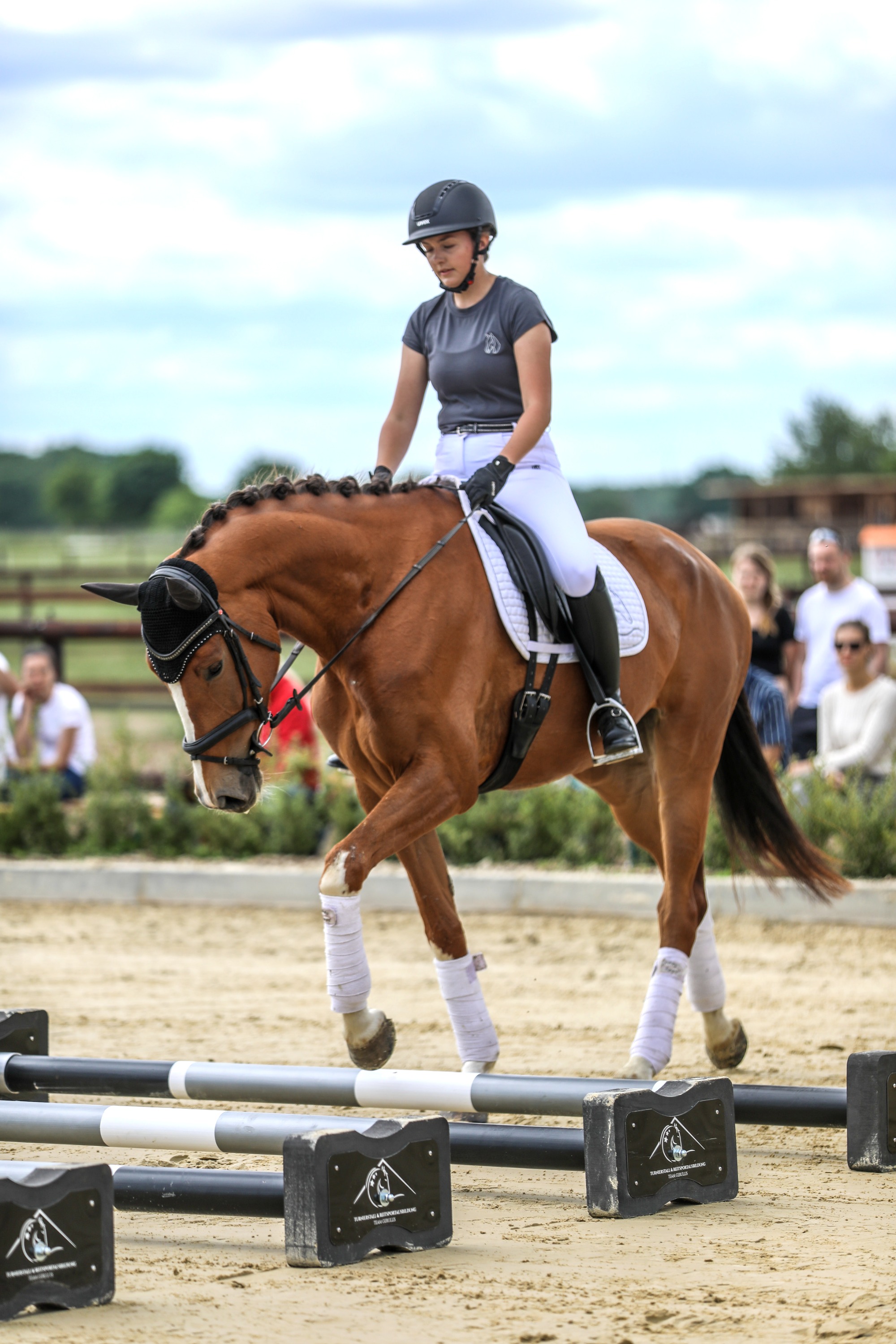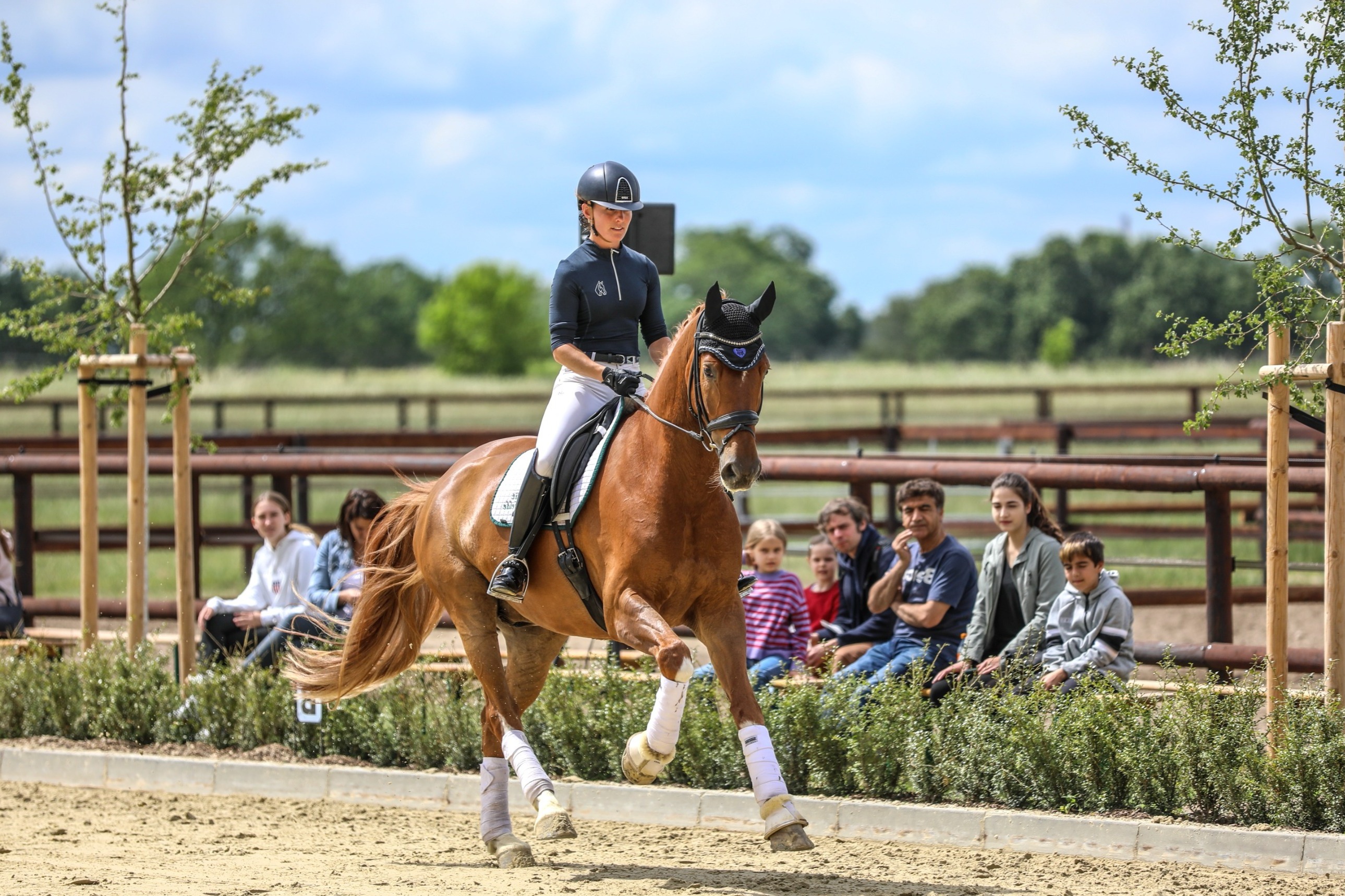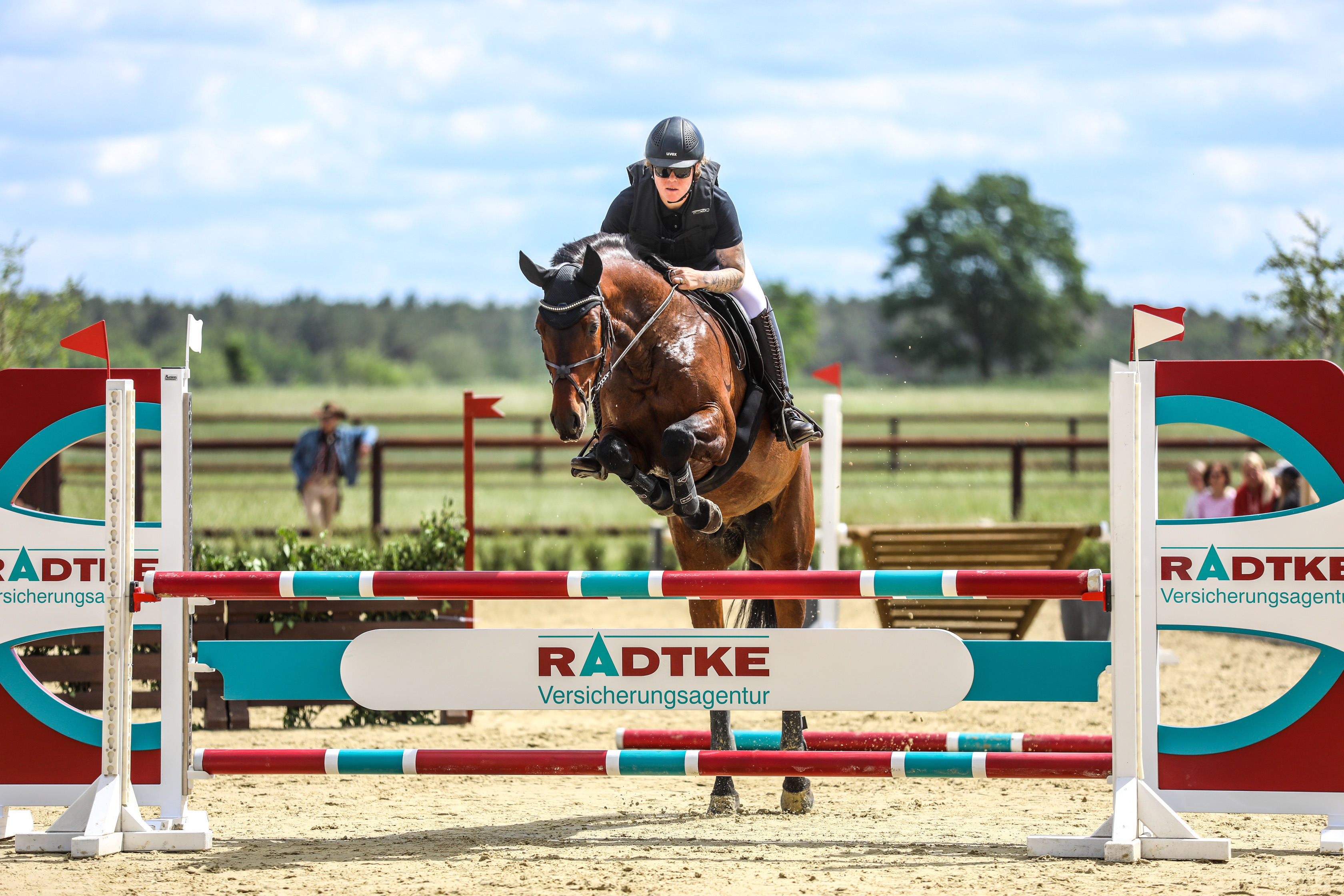
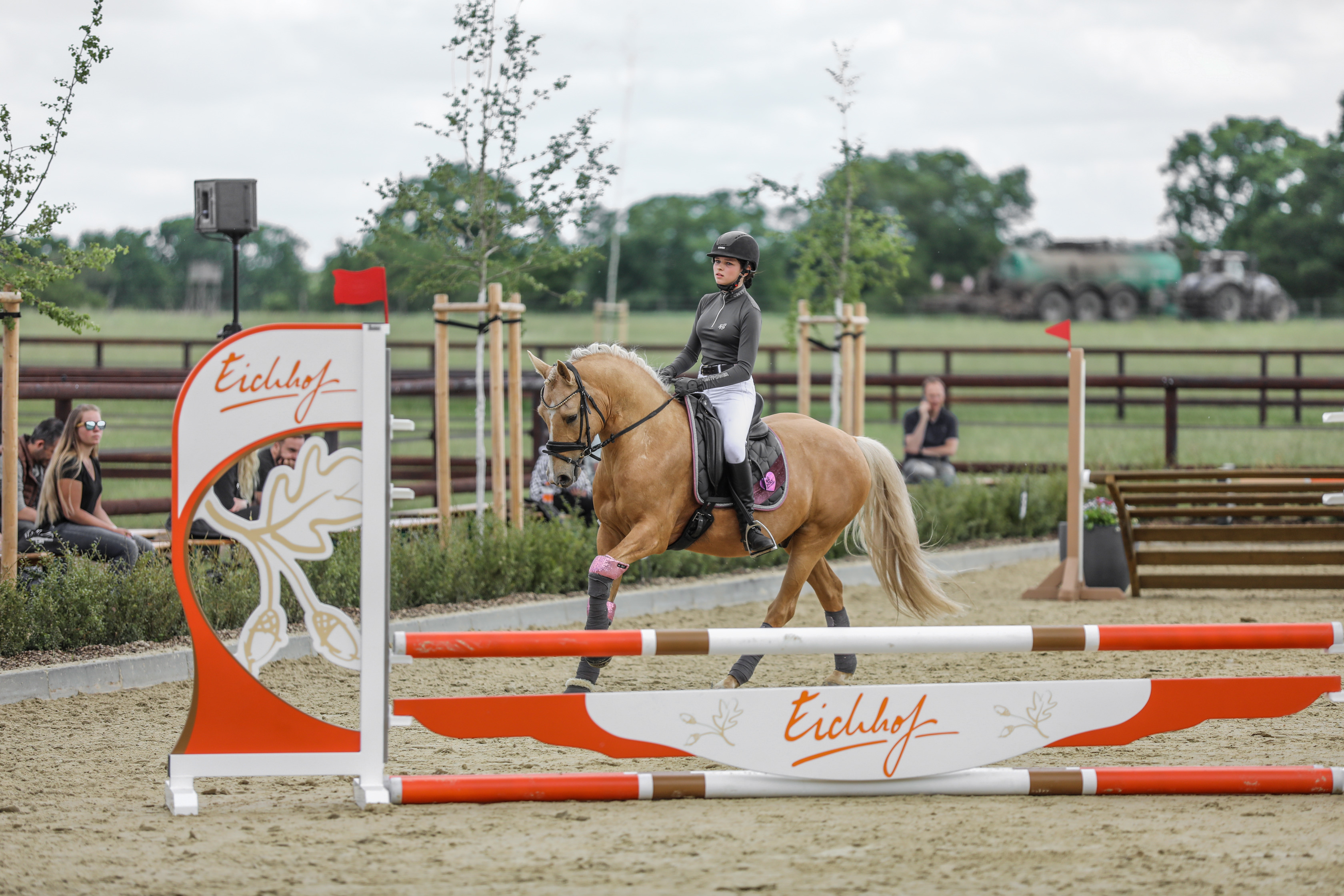
Riding clinic in Berlin and Brandenburg: how to choose trainer and format
At a glance
- A riding clinic is an investment of 200 to 350 euros for two days — and works only when trainer, format and your current level fit together. Anyone who doesn't check this pays for inspiration that evaporates after three weeks.
- Six criteria help with trainer choice: specialisation, level profile, didactic style, connection to an association or school, availability in your region, and preparation requirements.
- At Eichhof Akademie all clinics are explicitly open also to outside riders — from the cross-country day with Pia Anina Gerullis to the Grand-Prix clinic with Karin Lührs. Spectators are usually welcome free of charge.
A riding clinic in Berlin or Brandenburg is one of the most effective training formats available to an ambitious amateur rider. Effective only, however, when the choice is right — the wrong trainer, the wrong format or poor preparation turns a 300-euro investment into a fleeting experience rather than sustainable development.
In this article we explain which clinic formats exist, by which criteria you choose trainers, how to prepare properly, and what costs are realistic. We write from the experience of a facility that regularly hosts clinics with Karin Lührs, Christoph Hess, Alfonso Aguilar and Conny Faste — and shares the experience with hundreds of external clinic participants.
Which clinic formats exist
Clinics differ significantly by format. The most important types:
Day clinic. One day, usually Saturday or Sunday, with two to three sessions per rider. Good for first visits to a new trainer, good for local riders without overnight effort. Low-threshold — typically 120 to 200 euros.
Weekend clinic. Two days, usually Saturday and Sunday, with two to three sessions per day. The most widespread format. Good to deepen topics over several sessions. Typically 250 to 350 euros.
Multi-day intensive clinic. Three to five days, often on a training weekend plus one to two additional days. Rare, but intensive — good for riders wanting a breakthrough in a concrete topic. Typically 400 to 700 euros.
Special formats. Cross-country day, seat schooling, movement clinic, horsemanship day — each oriented not primarily on a figure but on a topic area. These formats are often open also to beginners.
Six criteria for trainer choice
The most renowned trainer is not automatically the right one for you. Six criteria help with selection:
1. Specialisation. What can the trainer really do well? Classical FN dressage through Elementary (L) or Medium (M)? Grand Prix? Starting under saddle? Seat schooling? Jumping? Groundwork? A generalist is rarely top in one area — anyone seeking specialist content chooses a specialist.
2. Level profile. On which level does the trainer typically work? Elementary (L)? Medium (M)? Grand Prix? Anyone who books a Grand-Prix trainer for an L horse often experiences frustration on both sides — the level doesn’t fit, the topics aren’t relevant.
3. Didactic style. Some trainers work through clear explanation and theory, others through repetition and feel, others through correction by direct aids. Which style fits your learning type?
4. Connection to school or association. FN trainer licence? Master Equine Manager? International experience? A formally verifiable qualification is no guarantee of good trainership but a good filter against charlatanism.
5. Availability in your region. Anyone living in Berlin cannot drive to southern Germany every weekend. Trainers regularly visiting Brandenburg or Berlin — like Karin Lührs and Christoph Hess at Eichhof Akademie — are realistically available.
6. Preparation requirements. Some trainers expect a concrete preparation programme (e.g., the horse must be secure in a particular figure). Others work with rider and horse where they currently stand. Clarify expectations before booking.
Typical trainer profiles in Berlin and Brandenburg
The following trainers work regularly in the region:
Christoph Hess — pedagogical clarifier, from Elementary (L) level, classical FN dressage with high methodological clarity. Regular at Eichhof Akademie.
Karin Lührs — Grand-Prix rider and judge, Elementary (L) to Grand Prix, ideal for riders with competition ambitions. Regular at Eichhof Akademie.
Alfonso Aguilar — international horsemanship expert, all levels, day clinics in group format. Regular at Eichhof Akademie.
Conny Faste — specialist in biomechanics between rider and horse, seat analysis, all levels. Regular at Eichhof Akademie.
Pia Anina Gerullis — Master Equine Manager, cross-country days, beginners to advanced. Permanent Eichhof team.
Detailed trainer profiles, respective strengths and concrete recommendations are in our detailed post What you take from a clinic with Christoph Hess, Karin Lührs and Alfonso Aguilar.
How to prepare properly
Preparation decides 70 percent of clinic success.
Three weeks before. Bring horse and rider into normal training condition. Not into peak form, not coming from a break. Write down three concrete questions or topics you want to work on.
One week before. Slightly reduce intensity so horse and rider are fresh. Check equipment — saddle, bridle, bandages, blankets, grooming kit, notebook.
The day before. Clarify travel, possibly organise accommodation. Calmly groom horse, briefly lunge, no training peak.
On clinic day. Be on site 60 to 90 minutes before the first session. Arrive, groom horse, put on saddle, calmly warm up. Sort the questions in your head.
During the clinic. After every session, take two to three minutes of notes — what was said, what changed, which exercise was particularly effective. These notes will be gold in two weeks.
After the clinic. Choose two concrete exercises from the notes and integrate them into every riding lesson over the next four weeks. More than two is overwhelming — the rest gets lost anyway.
Costs transparently
| Item | Typical range 2026 | Note |
|---|---|---|
| Weekend clinic fee | 250-350 € | Trainer- and format-dependent |
| Facility-use fee outside riders (Eichhof) | 15 €/day | Cash on site, on first clinic day |
| Guest stall for multi-day clinic | 30-50 €/night | Including standard feeding |
| Accommodation rider (holiday flat) | 80-150 €/night | At Eichhof Akademie bookable via Airbnb |
| Spectators | usually free | At some facilities daily fee 10-20 € |
Current prices for the Eichhof clinics are on our clinic page.
Registration in five steps
How to register for a clinic at Eichhof Akademie:
Step 1: Choose date and trainer. On our clinic page all dates, trainers and levels are listed.
Step 2: Preliminary conversation (optional, but recommended). By phone or email via our contact form — we clarify whether the clinic fits you and your horse.
Step 3: Binding registration. By email with your data, horse data, desired topics.
Step 4: Confirmation and payment. We confirm the registration and send you the payment data. The clinic fee is usually paid by bank transfer before the clinic.
Step 5: Arrival and clinic. Accommodation in our holiday flat with stable on request, guest stall for multi-day clinic, facility-use fee cash on site on the first day.
With sought-after trainers like Christoph Hess and Karin Lührs, places are often booked three to six months in advance. We recommend signing up early for our email list to be informed of new dates — or coming as a spectator to get to know the format before participating yourself.
Riding clinic formats at a glance
| Format | Duration | Sessions per rider | Typical costs | Suitable for |
|---|---|---|---|---|
| Day clinic | 1 day | 2-3 | 120-200 € | First visit, local riders |
| Weekend clinic | 2 days | 4-6 | 250-350 € | Standard format, deepening |
| Intensive clinic | 3-5 days | 6-15 | 400-700 € | Breakthrough in one topic |
| Cross-country day / special | 1 day | Full day | 120-180 € | Topic-based, all levels |
| Horsemanship day | 1 day | Full-day group | 200-350 € | Groundwork, all levels |
Further reading
- Berlin-Brandenburg Equestrian Association (LPBB, in German) — umbrella association with 445 clubs and around 500 licensed trainers in the region
- LPBB — Trainer licences (in German) — what an FN trainer licence means in the Berlin area
- FN — Trainer education (Trainer C / B / A, in German) — the three official qualification levels
- FN — Trainer continuing education and licence renewal (in German) — quality standards for regular continuing education
- Pferdeland Brandenburg (pro agro) — regional umbrella brand with FN-qualified yards and clinics
Written by Franziska Gutsche, owner of Eichhof Akademie. We regularly organise clinics at the Eichhof with nationally recognised trainers — from Karin Lührs (Grand Prix) via Christoph Hess (FN Training Ambassador) to Alfonso Aguilar (internationally recognised horsemanship expert). Outside riders welcome, spectators usually free of charge.
Questions & Answers