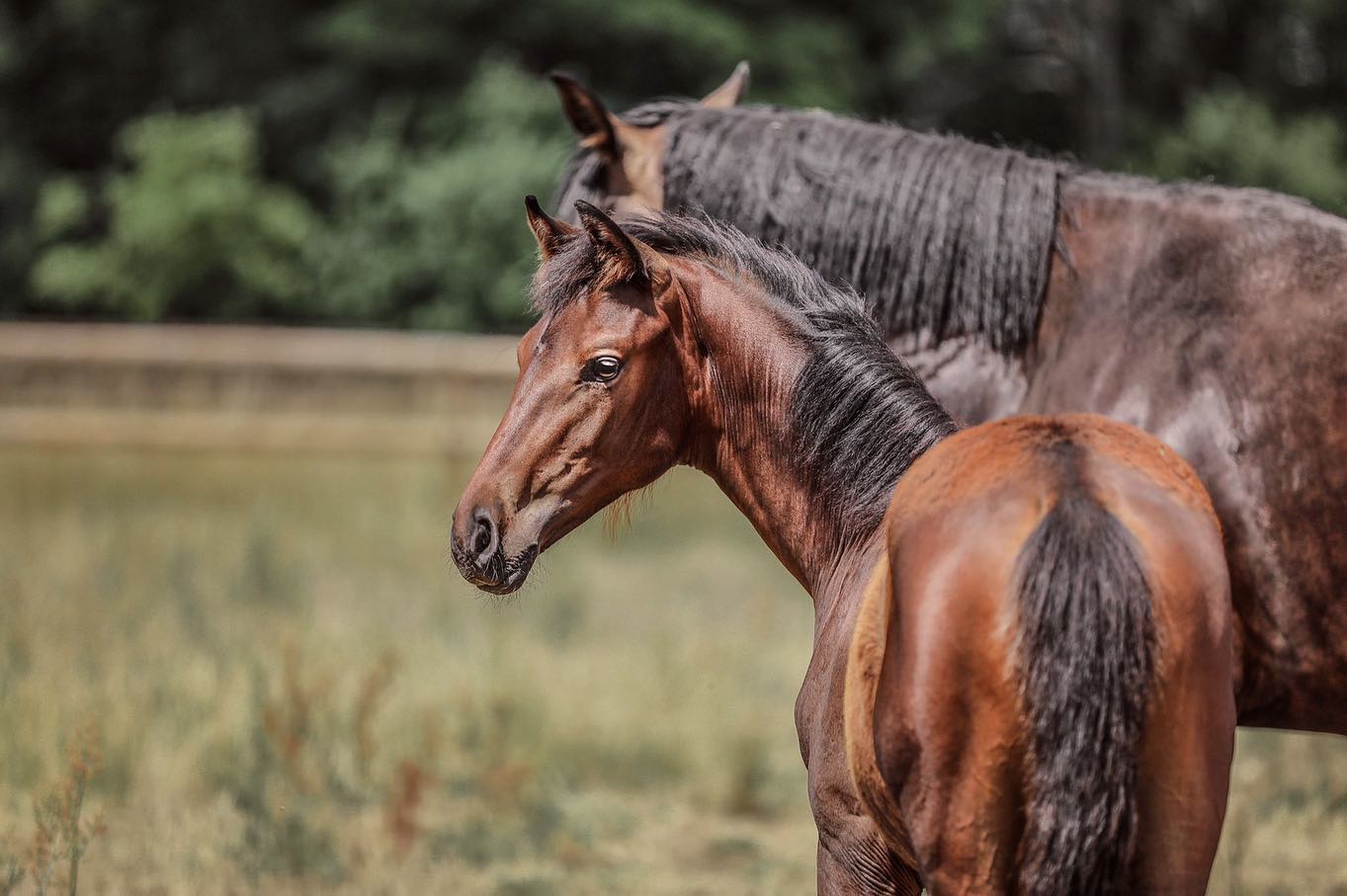
Hanoverian foal to buy: direct from the breeder in Brandenburg

At a glance
- Buying a Hanoverian foal directly from the breeder brings clear advantages: full knowledge of mare and stallion lines, observed rearing in the herd, lower probability of later character surprises.
- Foal prices for Hanoverian dressage stock in 2026 typically range from 8,000 to 25,000 euros direct from the breeder — depending on sire, mare line and movement picture.
- Eichhof Akademie rears foals deliberately in homogeneous groups, with early human contact, careful hoof care and without forced growth — three factors that decisively shape later rideability.
Buying a Hanoverian foal is one of the most beautiful and at the same time most difficult decisions a horse owner makes. Beautiful, because a self-raised horse allows a bond a bought riding horse never quite reaches. Difficult, because four to five years lie between foal and riding horse — and the rearing conditions make the decisive difference.
This article explains how Hanoverian foal purchase works in practice, what foals cost in Brandenburg in 2026, which selection criteria really hold, and why we at Eichhof Akademie prefer direct sale from the breeder over the auction route.
What you buy when you buy a foal
A foal is not a finished riding horse. It is a promise — and the promise is not redeemed by the animal but by the rearing. Anyone who understands this buys differently.
Concretely, that means: you don’t just buy a concrete foal, you buy a development path. Four factors shape what the foal becomes:
- Genetics — sire, dam, mare line. Solid line knowledge makes the difference between a good bet and a well-informed choice. More in our post on Hanoverian dressage bloodlines.
- Rearing conditions — group housing, early human contact, sufficient movement, no push for forced growth. These factors decide later rideability more than pedigree.
- Early experiences — farrier appointments, vet contact, calm encounters with strangers. What a foal experiences in its first two years shapes it for life.
- Starting under saddle — the most important moment in a horse’s life. More in Have a young horse started.
Anyone buying a foal therefore buys a plan. Anyone without a plan simply buys a risk.
Prices in 2026 — what to expect realistically
The price range for Hanoverian foals from dressage breeding is broad in 2026. Three segments are clearly visible.
Entry-level 8,000-12,000 euros. Foals with a solid but less fashionable sire, decent mare line, good conformation. Realistic candidates for amateur dressage sport through Elementary (L) or Medium (M).
Mid-field 12,000-18,000 euros. Foals with a modern dressage sire (De Niro, Don Schufro, Fürstenball, or comparable line), strong mare line and above-average movement picture. Candidates for amateur dressage sport through Medium or Advanced (S), with a good trainer structure also higher.
Top segment from 18,000 euros upwards. Foals from top mares with observable mare-line performance, top sires and striking movement in the maternal band. Classic auction candidates — at the Verden elite auctions the average price is around 8,000 to 9,000 euros, individual top foals there reach 30,000 euros and more (occasionally 50,000 to 60,000 euros).
Anyone buying in direct sale from the breeder usually pays no auction premium and has more transparency about the mare, rearing and prior history in return. Both routes have their justification — direct sale fits better for buyers who plan long-term and place depth before glamour.
How foal purchase works in practice
A foal purchase typically runs in five steps. At the Eichhof we follow this logic:
1. Initial conversation and target profile. What goal do you have for the later riding horse? Amateur dressage sport through L? M or S? What character traits do you want? What budget? We discuss this openly because a foal purchase shapes the next 15 to 20 years.
2. Showing of available foals. We show you our mares, the current foals, and the planned breedings. We also honestly mention which foals we would rather keep ourselves and which fit other buyers better.
3. Movement check and character check. On the pasture, in the round pen, or in hand we look at the foal closely. Walk, trot, canter, reactions to people, behaviour in the group. A good breeder shows you this honestly, even if it slows their own sale.
4. Veterinary accompaniment. For a foal, careful inspection diagnostics replace the large pre-purchase examination that makes sense only on a riding horse. We recommend a vet visit before contract conclusion to check hoof stance, skeletal development and general health.
5. Contract and handover. The purchase contract regulates price, handover date, rearing costs if the foal stays with us, and the official ownership of the brand mark. We take time to explain each point — purchase contracts are not standard forms but individual agreements.
Rearing at the breeder: what happens at our yard
We rear foals according to a clear concept, chosen not for theoretical reasons but because we have seen what makes the difference in later riding training.
Group housing in homogeneous groups. Foals best learn equine language from other foals and older horses. We divide our rearing groups by age and sex. This is how social behaviour, conflict resolution and self-confidence develop.
Early human contact. Already in the first weeks our foals learn that humans are okay — during the farrier visit, weighing, leading exercises. This is not drill but calm, clear routine. Horses that experience such encounters as foals are noticeably more relaxed when starting under saddle.
No forced growth. A foal fed for maximum growth looks impressive in summer — and already has stance damage by winter. We feed to need, with good hay, controlled concentrate amounts and judgement. The growth is slower, but the skeleton more load-bearing.
Consistent hoof care. Every four to six weeks the farrier comes. Crooked stances are corrected early, not delayed in the hope “they will grow out”. Hoof care in foal age is life preparation.
What is decided for you after purchase
You essentially have two routes after purchase.
Route 1: take the foal directly after weaning. At around six months the foal is weaned and can move to a rearing operation of your choice. You take over responsibility for farrier, vet, deworming, vaccinations, rearing board. The advantage is that the foal moves quickly to its future environment.
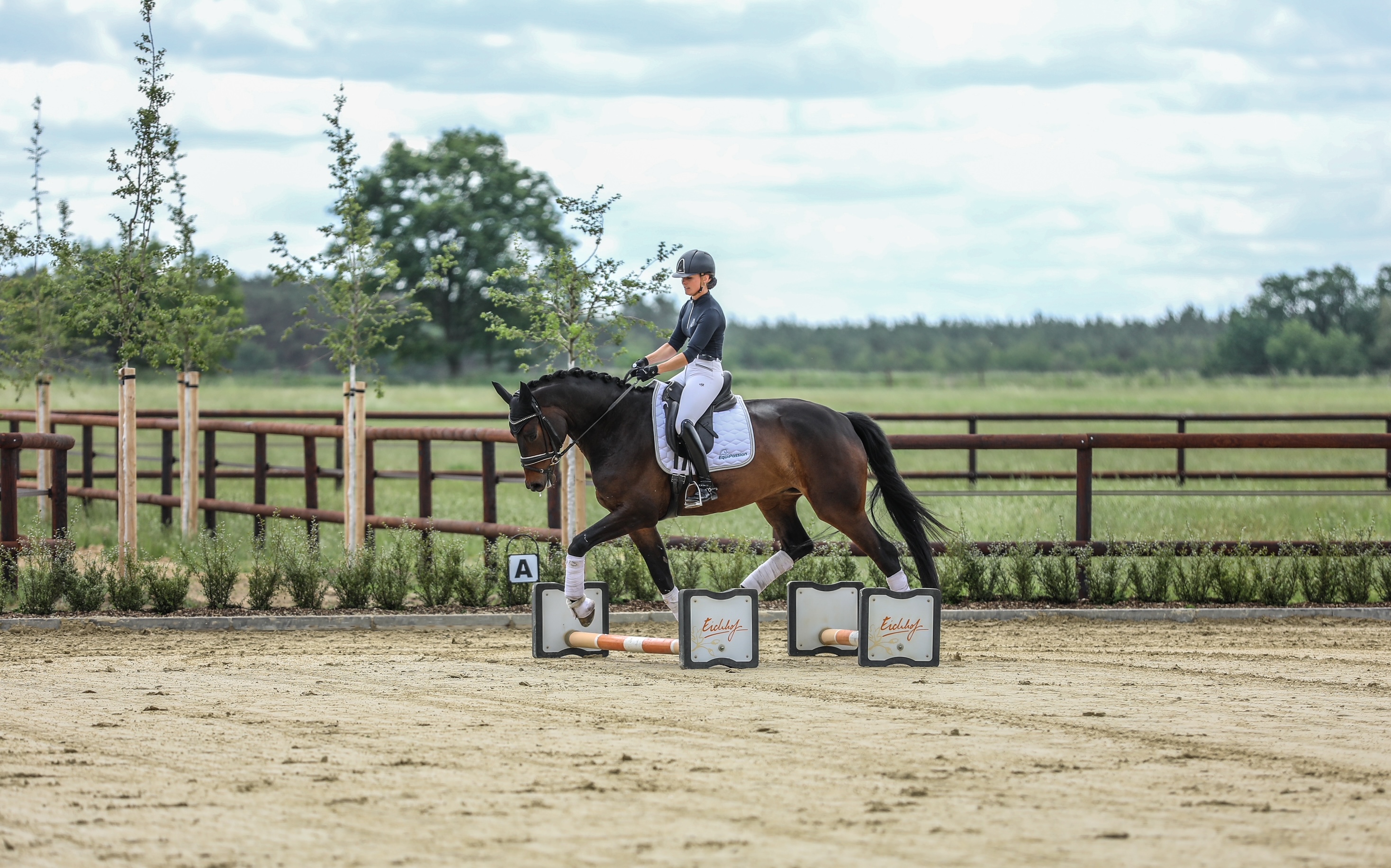
Route 2: leave the foal with the breeder. The foal stays until starting under saddle — about three to four years — in familiar surroundings. You pay monthly rearing costs, but see your horse grow at every visit and develop an emotional bond over time. At the Eichhof, later starting under saddle and professional schooling by our own team are also possible — a continuous development line from foal to riding horse under one roof.
Both routes have advantages and disadvantages. We recommend the second variant for buyers who can drive to us in 25 minutes and want to visit regularly — and the first for buyers further away with an established rearing operation nearby.
Current foals and mares at the Eichhof
Our breeding programme is deliberately compact. We have a manageable number of mares and breed only when the pairing makes sense — not automatically every year. Currently available foals, mare profiles and planned breedings are on our breeding and sales page or at a personal visit.
Anyone considering buying a foal from our breeding programme should take time — especially for a first conversation without sales pressure. We welcome buyers who know what they want, and buyers who are still uncertain and want advice. Both are welcome. Contact us for an initial conversation.
Hanoverian foal purchase: Eichhof key data
| Aspect | Eichhof Akademie |
|---|---|
| Foal price range | 8,000-25,000 € (direct sale) |
| Number of mares | Deliberately small, individual breedings |
| Rearing form | Group housing by age and sex |
| Registration appointment | Summer/autumn by Hanoverian Association |
| Handover options | After weaning (6 months) or after starting under saddle (3-4 years) |
| Follow-up training possible | Yes, by Eichhof team (starting + professional schooling) |
Status May 2026. Prices and availability of current foals on request anytime.
Further reading
- Hannoveraner Verband (main site, in German) — the official Hanoverian studbook in Germany
- Hannoveraner Verband — Foals and foal auctions (in German) — overview of rearing, assessment and auction formats
- Hannoveraner Verband — Studbook registration (in German) — the official procedure of registration and assessment
- Hannoveraner Pferdezuchtverein Berlin-Brandenburg (in German) — the regional association, annual foal show, around 100 members
- Hannoveraner Verband — Regulations 2025 (PDF, in German) — the current breeding regulations with all assessment criteria
Written by Franziska Gutsche, owner of Eichhof Akademie and Hanoverian breeder. Our breeding programme is deliberately compact — we only breed when sire and mare fit, and rear our foals in homogeneous groups with daily human contact.
Questions & Answers